Every man who's priced a horsebit loafer knows the number. Gucci's version starts around a thousand dollars and climbs from there. The bit itself costs nothing to make, it's just a brass bar across the vamp. What you're paying for is the logo on the insole and decades of advertising that trained buyers to equate that bit with a single house. The horsebit predates Gucci by decades. It's a bridle hardware reference, an equestrian detail translated to dress shoes, and it belongs to no one. Here is the horsebit loafer without the Gucci tax.

What the bit actually is
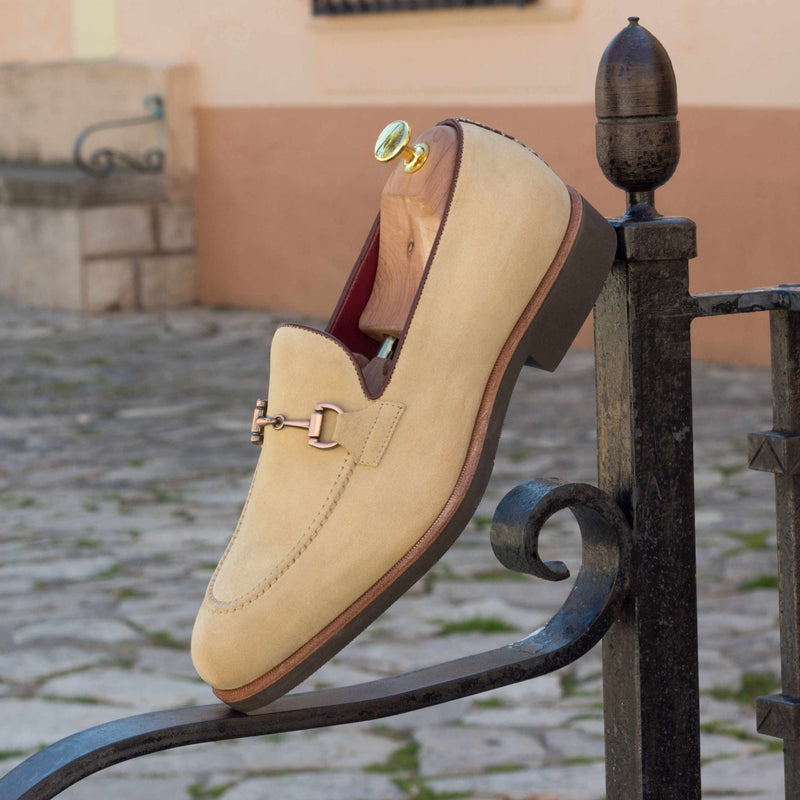
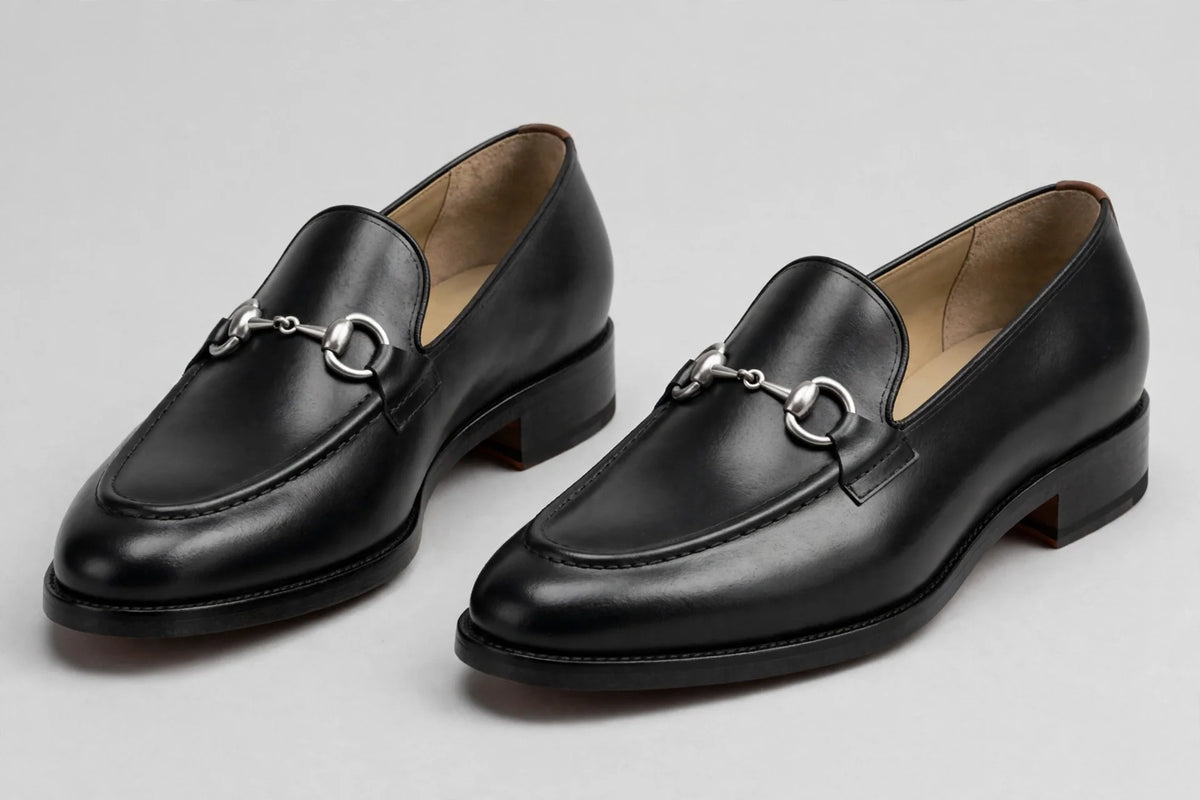
On a horsebit loafer the bit sits across the vamp, usually just behind the toe. It reads as a detail rather than a structure. It does not hold the shoe together. The last and the throat do that. It does not need to be a logo-bearing plaque. It can be a simple bar, polished brass or brushed gunmetal, set flush against the leather or standing proud. The detail works because it is quiet. A hint of equestrian reference, not a billboard. A made-to-order house can render it in any metal finish, any scale, any placement across the instep, without charging for the privilege of a name you did not ask for.
Where Gucci's price lives
The markup on a designer horsebit loafer is not in the leather or the construction. It's in the retail floor, the campaign, the flagship lease, and the licensing agreement that lets the house extend the bit across belts, bags, and scarves. You are not paying for a better last or a softer lining. You're paying for the audience that recognizes the bit from a distance. Made to order removes that audience from the equation. You pay for the hide, the last, the bench hours, and the shipping. Nothing else. The bit is geometry, not intellectual property.
The horsebit without the markup
Made to order, a horsebit loafer changes in ways that matter. First, the last is drafted to your foot, not to a sample size. The heel cup holds. The throat does not gape. The flex point sits where your foot bends. Second, the leather is chosen at the bench, box calf, suede, velvet, patent, not pulled from a preselected seasonal menu. Third, the bit itself is specified by you. Metal, finish, scale, position. A Gucci horsebit loafer arrives as a finished object with a price already baked in. A made-to-order horsebit loafer arrives as a spec you confirmed before anything was cut, typically over four to six weeks of production.
The design studio lets you build the horsebit spec on screen before committing. Last, leather, bit finish, size, width. It locks before the first piece of leather is touched. Build the spec here.
How to wear it
A horsebit loafer reads dressier than a tassel but less formal than an oxford. It slots between the two. With a navy suit and no socks, it is evening-adjacent without being black tie. With charcoal flannel and a tucked oxford shirt, it is the kind of shoe a man wears when he wants to look put together without looking like he tried. In suede it leans casual. In box calf it carries into a dinner or a wedding without apology. The bit catches light at the instep. That is precisely its job. A small flash of detail at the top of the foot, nothing more.
The questions horsebit buyers ask
Is the horsebit a Gucci exclusive? No. It is an equestrian-derived hardware detail used by dozens of makers over seventy years. Gucci popularized it; they did not invent it, and they do not own the geometry.
Does the bit add anything structurally? Not really. It is decorative. The shoe's integrity comes from the last, the throat tension, and the sole attachment. The bit is a visual detail, and it should stay that way. Small, clean, proportional to the shoe's scale.
What finishes work best on the bit? Polished brass for warmth and contrast against dark leather. Brushed gunmetal or nickel for a quieter, modern read. Antique silver for vintage-leaning builds. The finish should match the shoe's register, not compete with it.
Can I build a horsebit loafer in velvet? Yes. Velvet uppers take a metal bit well, and the contrast between the soft nap and the hard bar is precisely the kind of detail made-to-order exists for. Embroidery and insignia are different conversations. The bit itself is hardware, not thread.
How long does made-to-order take? Four to six weeks from the confirmed spec. Nothing is cut until size, width, leather, and bit finish are locked.
The design studio builds the horsebit loafer spec on screen, last, leather, bit finish, size, width, before anything is committed. Build it, sign off on it, and the pair arrives as you specified it.