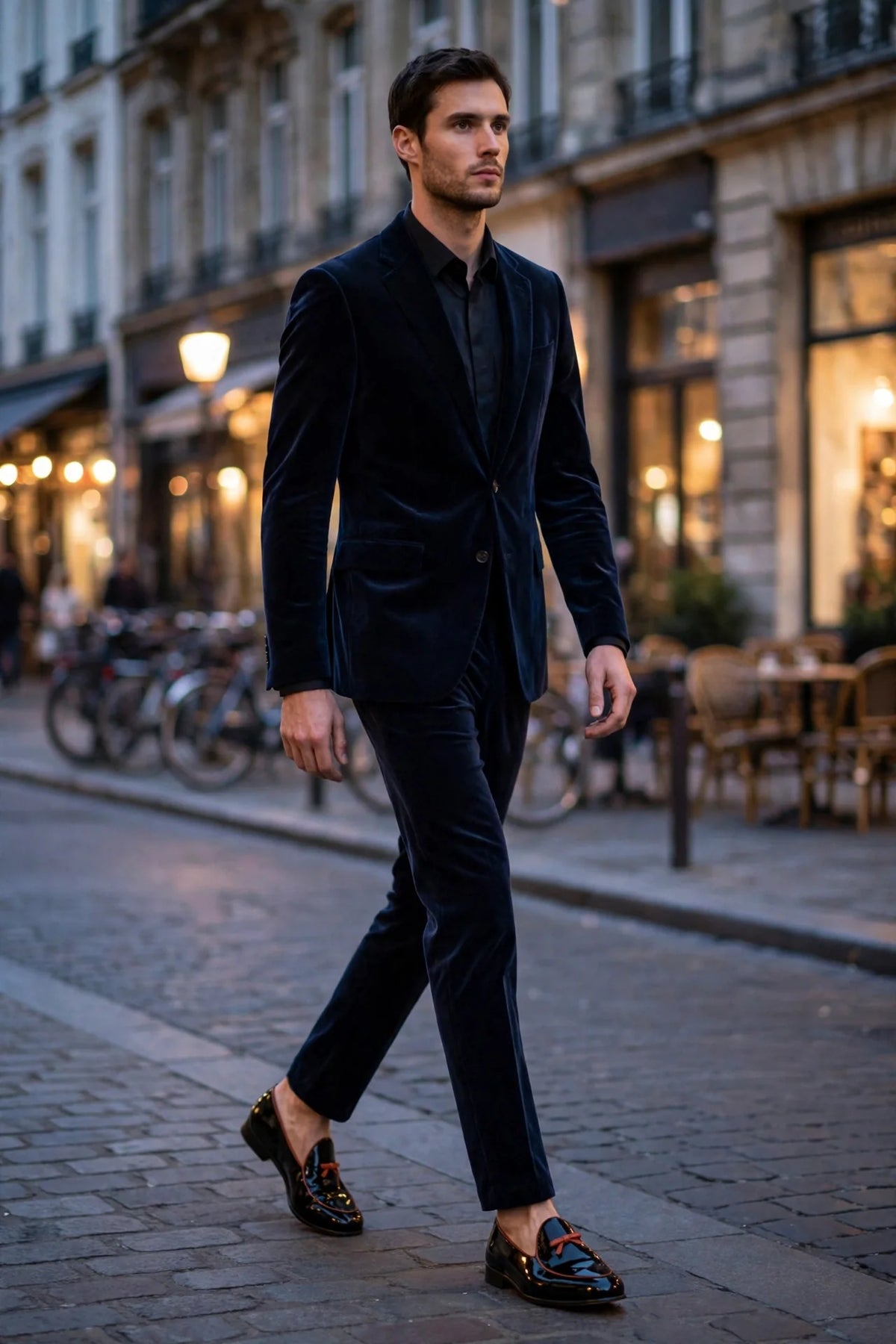
It depends on how much velvet you are wearing. With a full velvet suit, patent or polished leather is the stronger call, because the shine breaks up the pile. With a velvet jacket over wool trousers, the velvet slipper is the classic answer, and it has history on its side.
Velvet owned the room at Esquire's Better Men Honours in London this week. Tom Hiddleston arrived in a velvet double-breasted suit, David Harewood in a dark velvet double-breasted jacket, and the coverage kept coming back to the same fabric. Aaron Pierre, by contrast, wore a sharply cut double-breasted tuxedo in black, proof that the evening still had room for classic black tie. The night was not a costume parade. It was a reminder that velvet has moved from the smoking jacket to the full suit, and the shoe has to keep up with which version of velvet the man is actually wearing.
What the orthodoxies say
There are three of them, and they do not all agree. The oldest is the smoking jacket tradition. The velvet slipper was born beside the velvet smoking jacket, as a house shoe for evenings at home, so velvet with velvet is not a mistake. It is the original pairing, and it has never really left the building.
The second is the modern creative black tie rule. Velvet slippers are the accepted creative black tie shoe, especially in fall and winter when heavier fabrics feel right. If the invitation says black tie and the room will be candlelit, a velvet Belgian slipper is not a risk. It is the expected answer.
The third is the classic dinner shoe rule. Patent is the traditional black tie shoe, and it has been for generations. The shine below the waist is the formal note. A polished leather shoe plays the same role with a quieter finish.

The case for breaking the texture
Here is the counter view, and it is a fair one. Velvet on velvet can flatten into one texture from shoulder to toe. The point is not to walk in looking like a ninja, one pile from collar to cuff. Patent or polished leather answers that problem without changing the color scheme at all. Black on black works, because the materials contrast even when the colors do not. The color stays quiet, the material does the talking.
Velvet forgives nothing.
That is why the question is worth asking at all. A shoe that is too bright turns the whole outfit into a novelty act, and a shoe that is too dull makes the suit look like it got dressed up alone. The contrast school solves it with shine. The matching school solves it with mood. Both are defensible, and the suit itself decides between them.
Where each answer lands
With a full velvet suit, take the patent Belgian. The shine does the work the color does not, and the outfit gains a second texture exactly where it needs one. With a velvet jacket over wool trousers, take the velvet Belgian, navy or black. There the velvet provides the contrast against the wool, and tradition backs the choice. With a colored velvet suit, burgundy or green, black patent is still the safest call, since the suit already carries the color. For a groom or a guest heading to a winter wedding in a velvet suit, the same logic holds. Decide the shoe when you decide the suit.

One number worth knowing before the holiday season fills the calendar. A made-to-order velvet Albert from Smythe and Digby is $325, and standard production runs 4 to 6 weeks. That lead time is the real reason to decide on the shoe when you decide on the suit, not the week of the event.
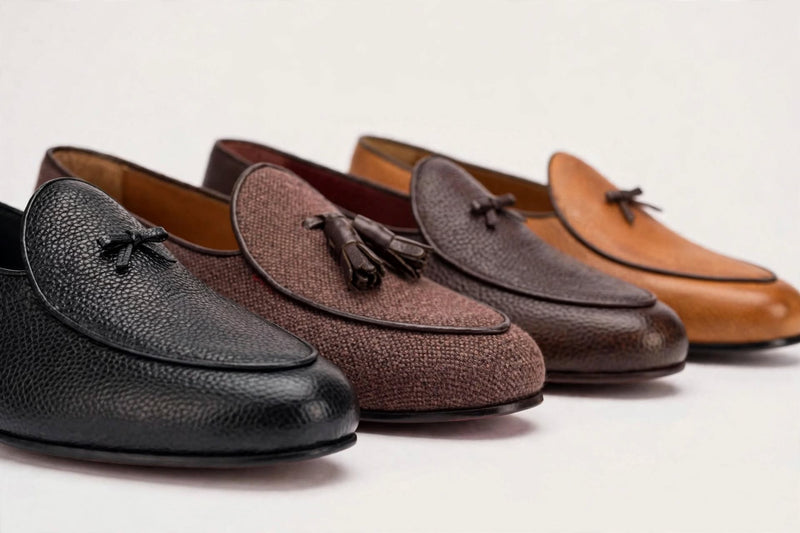
To build the pair to your own specification, Design Your Pair in the Smythe and Digby studio, where the Belgian slipper builds in patent, velvet, suede and linen, each with its own seasonal moment.
Frequently asked questions
What shoes do you wear with a velvet suit
It depends on the suit. With a full velvet suit, wear patent or polished leather in a dark color. With a velvet jacket over wool trousers, a velvet slipper is the classic answer.
Can you wear velvet shoes with a velvet suit
Yes, and tradition supports it, since the velvet slipper was born beside the velvet smoking jacket. But a full velvet suit plus velvet shoes can read as one flat texture, and patent breaks that up.
Are black patent shoes formal enough for a velvet suit
Yes. Patent is the traditional black tie shoe, and its shine is the texture contrast a full velvet suit needs.
What is the difference between a Belgian slipper and a velvet loafer
The Belgian slipper has an apron seam and a small bow on the vamp, a shape built for evenings. A velvet loafer is the broader family name for slip-on velvet shoes, and the Belgian is the dressiest member of it.