The invitation usually arrives on a Tuesday — heavy paper, ribbon under the flap, and somewhere near the bottom the one line that quietly decides your autumn: black tie, cocktail attire, dressy casual, or nothing at all. That line is the whole puzzle. Because the question every guest is actually asking underneath it — wedding guest loafers: yes or no? — has settled itself over the past few seasons. The answer is yes, nearly everywhere on the card. What separates the guest who looks dressed from the guest who looks dressed up is one skill: matching the build of the shoe to the line on the invitation.
This season does half the work for you. The wedding calendar now runs deep into winter — earlier sunsets, candlelit receptions, rooms lit low and warm — and the loafer family's dressiest branch was built for exactly that light. The softer branches cover everything else the invitation can ask of you. What follows is the decode: the lines you are most likely to read this season, and the loafer that answers each one.

The invitation is the spec
Read the dress-code line the way a tailor reads a measurement: not as a vibe but as a floor and a ceiling, and your job is to land between them without touching either. Formality in a shoe is carried by four things — material, throat, sole, decoration — and every dress code moves those dials differently. Velvet outranks suede; a high Albert throat reads dressier than a low slip-on collar; a thin leather sole outranks a thick one; grosgrain and a crest move a shoe up, a penny saddle moves it down. Once you read codes that way, the loafer stops being one style and becomes a range of answers, and the invitation tells you which one to pick.
Black tie: the velvet Albert answers the door
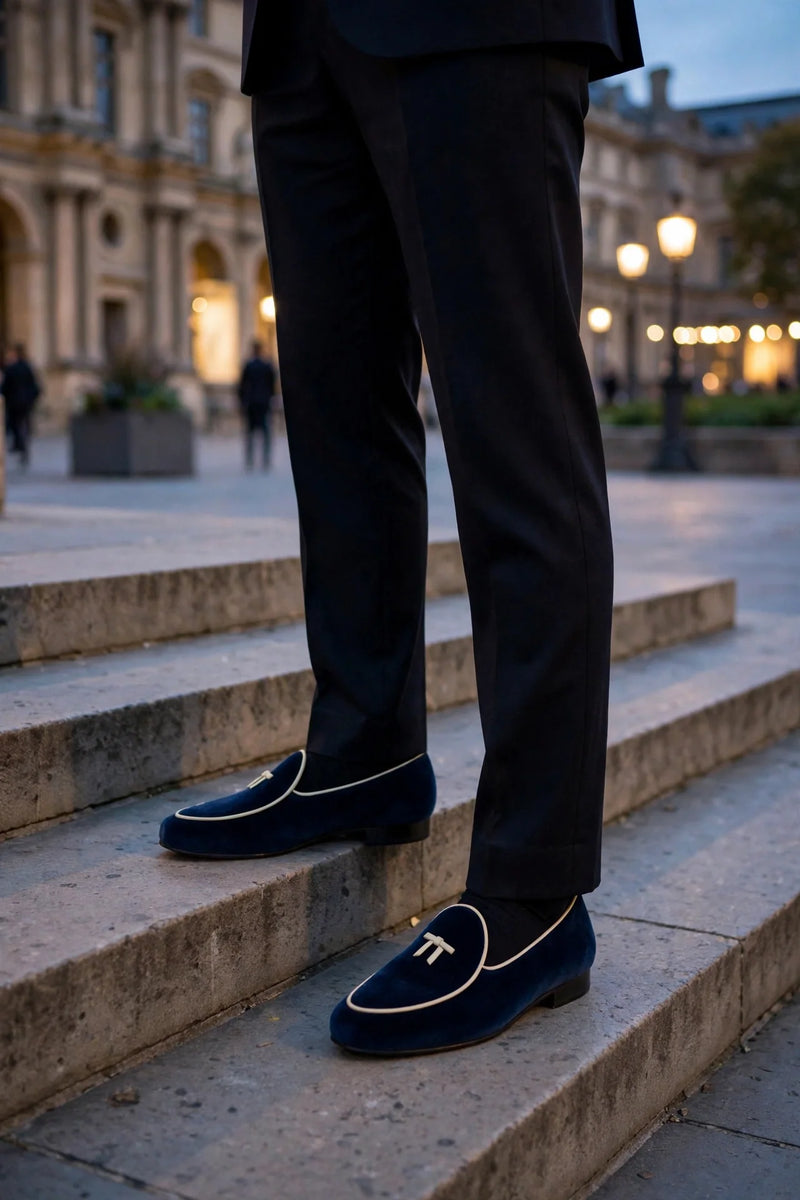
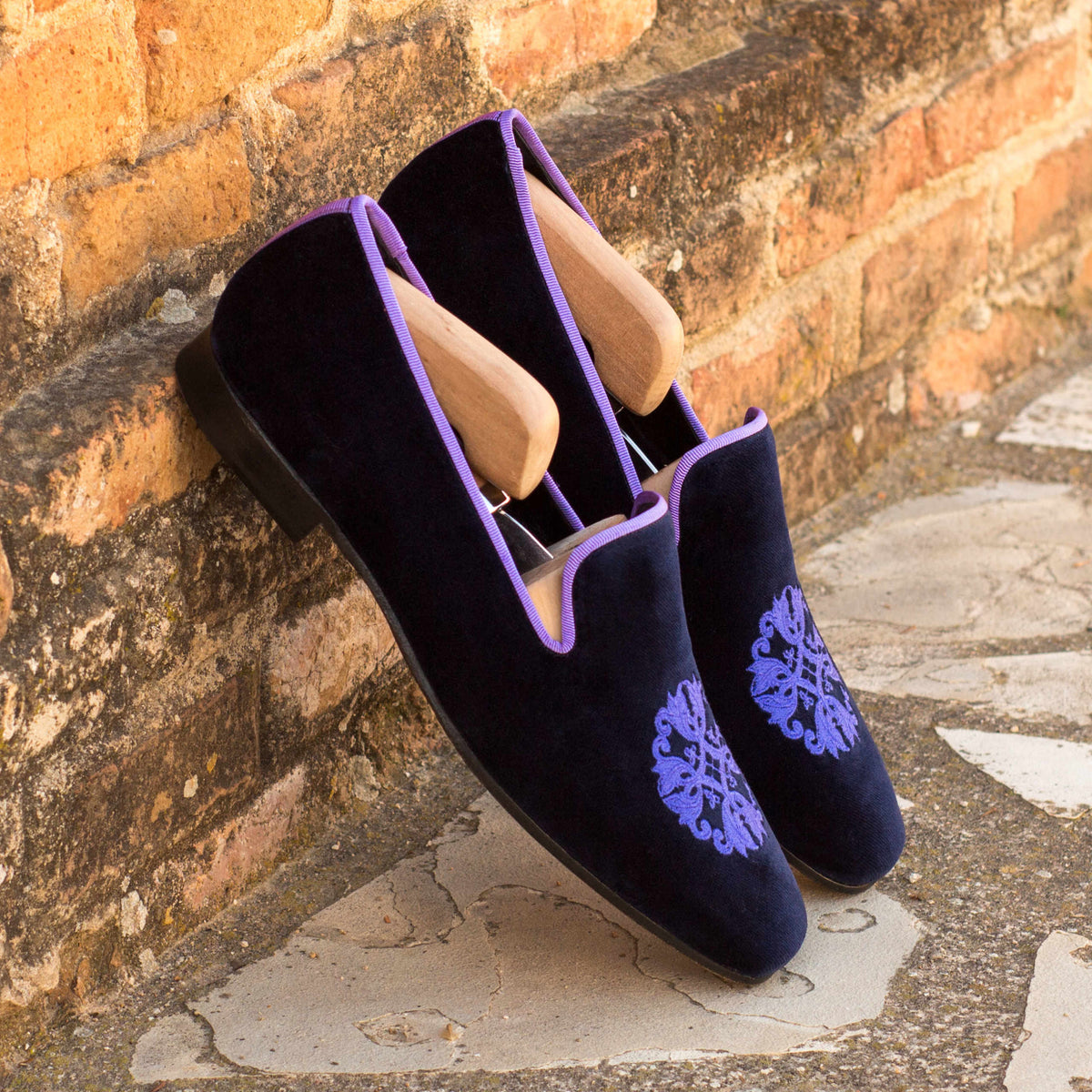
The most specified code on the list has the clearest answer. A dinner jacket speaks in silk and grosgrain facings, and the shoe that answers in the same texture language is the velvet slipper: a high-throated Albert in deep navy or black, collar piped in matching grosgrain, a small embroidered crest at the vamp. This is not a shoe getting away with something at a formal wedding — it is the shoe that family of rooms was built around. The full argument, texture by texture, lives in our black tie pairing piece; the guest's short version is that under a dinner suit, velvet is the reference answer, not the gamble.
Formal, black tie optional: one step down, same direction
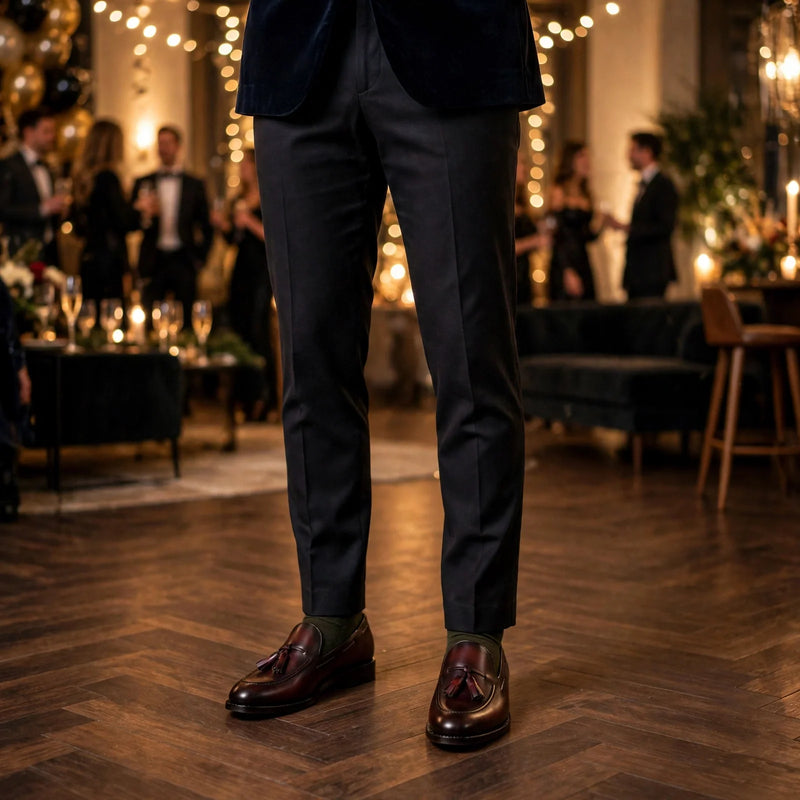
The code most guests actually receive is the ambivalent one, and it is where men err in both directions — a tuxedo shoe at a suit wedding, or something sneaker-adjacent at a chandeliered one. The loafer answer is a plain dark slip-on: a Belgian in black or deep navy calf, unadorned, or velvet worn without ceremony. The decoration dials down while the material holds the line — clean collar, thin sole, and a proper trouser break over it. Nobody remembers the shoe, which at this code is precisely the point.
Cocktail attire: the suede Belgian
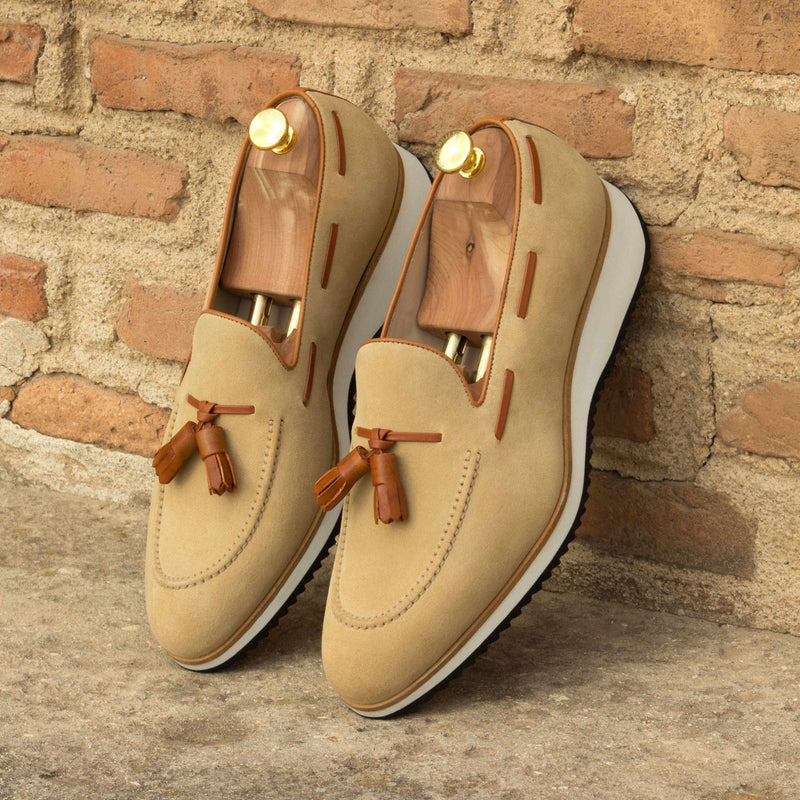
Cocktail is the code the loafer was born for. A Belgian in fine suede — soft apron, small bow or a hanging tassel, thin leather sole — lands exactly where the code wants you: dressed, but not in competition with the podium party. The material does the relaxing, the structure does the formality, and the pairing is forgiving — a mid-grey or navy suit, a knitted tie if you brought one. Of every build in the decode, this is the one that still feels right at the last song, which is worth something at a four-hour reception.
No code on the card: the structured loafer holds the line
When the invitation says nothing at all — or mutters smart casual under its breath — the guest's risk is not underdressing the room but underdressing with intent. A structured loafer fixes that: a tassel or bit loafer in polished calf under a sport coat and pressed trousers reads as a man who chose his shoes on purpose. The line to hold is simple — dressed with intent, never louder than the couple. At this end the loafer family's casual side is a feature, not a liability.
What the season itself changes
Two things, and both favor the family. First, the calendar: the ceremony season has stretched deep into winter, and winter's low, warm indoor light is velvet's natural habitat — the nap catches candlelight in a way polished calf cannot manage. Second, the palette: cold-weather wedding wardrobes go darker and quieter, which raises the whole range's perceived formality a notch; a burgundy or navy velvet that would read expressive in June reads as seasonal correctness in December. For the winter or Scottish-tinged wedding specifically, the tartan alternative is its own branch of the season's answer.
When the shop wall can't match the line
Here is the guest's quiet advantage this season. The wall stocks one colorway per style and calls it a season; the invitation asks for one specific combination — navy velvet against a lavender collar, say, or a suede whose trim is darker than any buyer guessed. The made-to-order route closes that gap exactly: the pair is specified in the design studio — body material, the apron, the piping, the vamp — with the full spec confirmed with you before a single piece is cut, then built once, over about four to six weeks. That timeline is the real timing lesson of the season: order in the week the invitation arrives, not the week of the wedding, and the made-to-order answer beats the wall on its own turf. The wedding loafers collection is where most guests start reading.
Answers before the RSVP goes back
Can you wear loafers to a wedding? Yes — nearly every dress code on a modern invitation has a loafer build that answers it correctly. The skill is matching the build to the code: velvet under black tie, plain dark calf or velvet for formal, suede for cocktail, structured calf when the card goes quiet. The family spans the whole range; any single pair only spans part of it.
Are loafers too casual for a formal wedding? Not at the dressier end of the family. A velvet slipper or a plain black calf slip-on with a thin leather sole reads exactly as formal as the room demands — the slip-on entry is not what reads casual; thick soles and clunky structure are. Keep the sole thin and the decoration quiet and the question answers itself.
What color loafers should a guest wear? Let the code and the season decide, not a rulebook: dark and quiet for formal rooms — black, deep navy, a burgundy velvet — with depth of material doing the talking. This season's receptions run indoors and low-lit, which favors richness of texture over brightness of color.
How early should a guest order made-to-order wedding loafers? The week the invitation arrives. A pair built once to your confirmed spec takes about four to six weeks, and for wedding guest loafers that lead time is the whole difference between the exact pair and the nearest pair on a wall.