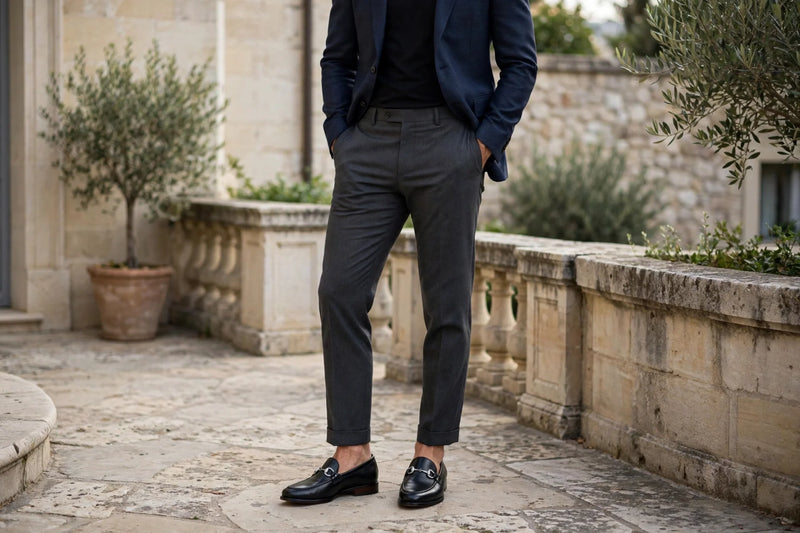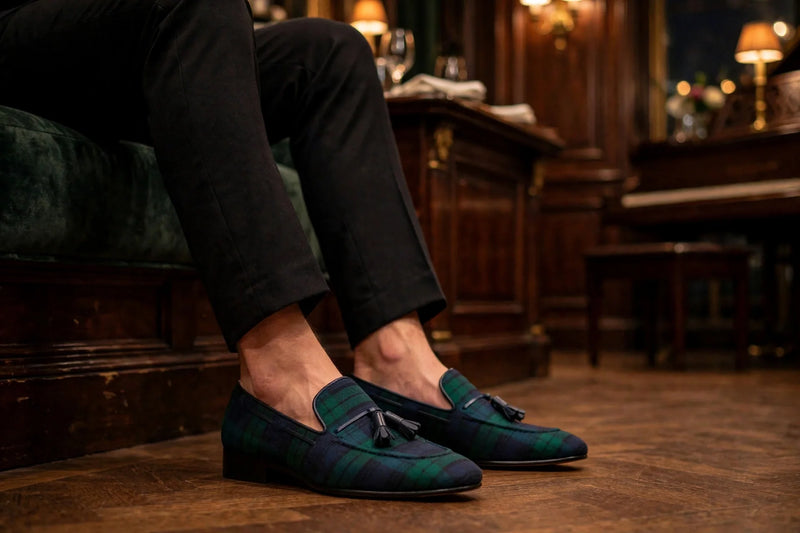
There is a script for wedding shoes, and nearly every groom follows it without ever being handed it: black calf, plain toe, polished until it disappears. The shoe is the one decision a man is quietly asked to make small. A Scottish wedding has never agreed with that script. When the tartan runs through the ushers' buttonholes and the sash on the mother of the bride, the pattern is expected to travel the whole outfit — and the men who read the tradition best are the ones who let it reach their feet. Tartan wedding shoes are that argument, made formal: the one pattern at the wedding, placed on the one garment guaranteed to be in every full-length photograph.
Why the pattern belongs at your feet
Work out where the cameras point on a wedding day. The aisle: full length, the couple mid-step, the whole frame nothing but suit and shoes. The speeches: seated, legs crossed, the shoe resurfacing at the table between the toasts. The first dance: the most photographed footwork a man will ever perform. The three moments a wedding actually remembers are the three moments the feet are in frame — and a shoe chosen to disappear is a hole in every one of them. A wedding outfit also gives a groom almost nowhere else to put a pattern: the suit is a solid, the tie is a solid, the flower is a single bloom. Below the ankle is the one placement that reads as conviction rather than costume.

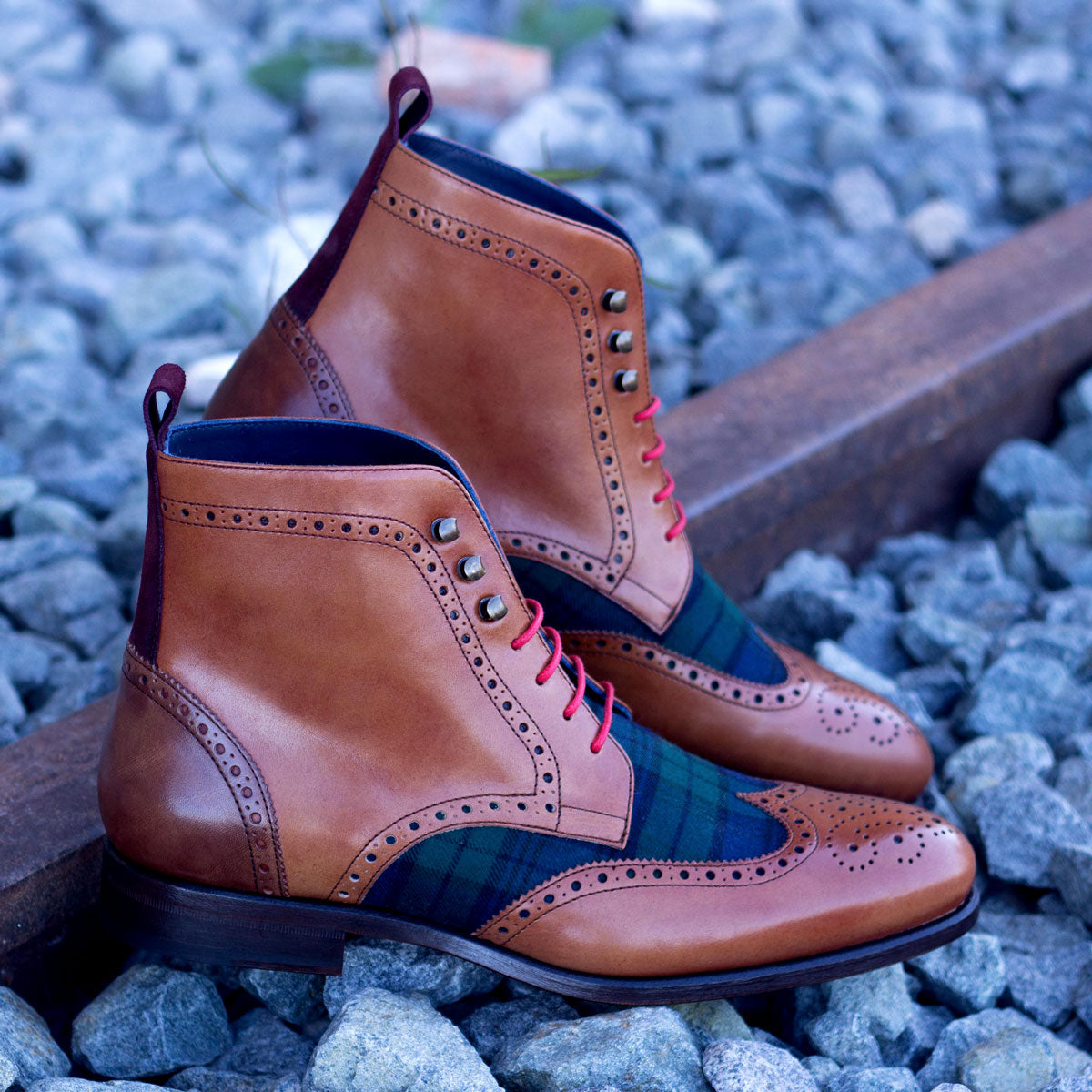
The pair above shows the register: broguing formal enough to stand next to a suit, the woven blackwatch check set into the waist panels and the exposed tongue, cognac painted calf carrying the toe cap, quarters and heel counter, a burgundy suede pull tab at the back. The structure keeps the shoe on the right side of formal. The tartan does the remembering.
The kilt question, answered two ways
Highland dress already owns one wedding shoe: the ghillie brogue, tongueless, long-laced and wrapped around the calf, as much a part of full highland kit as the sporran. For the groom wearing the kilt, it is the correct answer, and nothing here will talk him out of it. But a Scottish wedding is not a uniform. The best man is in a charcoal suit. The father of the bride wants one note of the family sett without borrowing a costume. The groom himself, come the evening, may leave the highland outfit with the photographer and change into black tie. For every man at the wedding who is not in the kilt, a tartan-panel dress shoe carries the connection at suit altitude — lacing and broguing intact, the check set low in the build, quiet enough to survive a candlelit reception, clear enough that nobody misses it at the aisle.
Choosing how much tartan
The dial has three stops, and the wedding itself decides where it sits. A whisper: a single tartan apron on a slip-on, the note plucked rather than struck — right for a civil ceremony or a garden afternoon. A panel: the check set into the waist and sides against calf or flannel, as on the boot above — the working answer for a suit-wearing groom, visible at the aisle, correct at dinner. A statement: tartan carrying the vamp outright, for the man whose whole thesis is the pattern. The calibration rule is simple: the darker the room, the quieter the base leather wants to be — navy or dark calf under the tartan for an evening wedding, the flannel-and-check register for daylight in the country.
Ordered against the calendar
A wedding is the one purchase with a hard date on it, so a made-to-order pair is worked backward from that date. The build runs about four to six weeks, one pair at a time to one confirmed spec — and the milestone that matters is the confirmation itself: silhouette, tartan placement, leather, every detail locked on screen before a single piece is cut, the same way the menu and the florals get locked. You build the pair in the design studio — every segment's pattern and color under your control, the pair turning on screen the way it will arrive — and once the spec is confirmed, the bench takes over. What the design tool makes possible for a wedding pair is laid out on the custom wedding shoes page. That is how tartan wedding shoes are ordered: against the calendar, to one spec, one pair at a time.
Before you order: the questions grooms ask
Can I wear tartan shoes with a kilt? Full highland dress calls for the ghillie brogue — that is the tradition, and it holds. The tartan-panel build is for the rest of the day and the rest of the party: the man in the suit, the evening change, the father who wants the sett without the full kit. Both answers are correct; they answer different men.
Are tartan wedding shoes formal enough for a black-tie evening? At the panel setting, yes — the check sits low in the build, the broguing and lacing keep the shoe in dress territory, and a dark calf base under the tartan reads evening the way a midnight stripe reads evening. The statement dial is the one to save for daylight.
Our wedding isn't Scottish. Is tartan off limits? No. Black watch is an open tartan — historically the pattern of a regiment rather than a single clan — which is why it is treated as public property, worn by everyone from a ten-year-old princess to her grandmother. We made the full case when the royal family put it back in rotation: the black watch piece is here.
How early should I order before the wedding? Work back from the date: about four to six weeks for the build, plus room to confirm the spec calmly rather than against a deadline. The confirmation is the milestone that starts production — lock the spec early and the calendar takes care of itself.
Where do I start? In the design studio. Pick the silhouette, place the tartan where your wedding wants it, and build the pair on screen before anything is cut.