A shoe tree holds a shoe in the shape it was made in, pulls moisture out of the leather after a day of wear, and keeps creases from setting into cracks. That is the whole job, and it is why a pair that lives with trees looks years younger than the same pair left empty in the closet.
A made to order pair is an investment of time before it is an investment of money. A velvet Albert from Smythe and Digby is $325, and standard production runs 4 to 6 weeks. A pair of cedar trees costs a fraction of that, and it is the cheapest way to protect the wait.
What a shoe tree actually does
Leather softens with body heat and moisture while you wear it, then dries in whatever shape it was left in. A shoe left empty collapses at the vamp and curls at the toe, and the creases set exactly there. A tree fills the shoe so it dries straight, the way the maker intended.
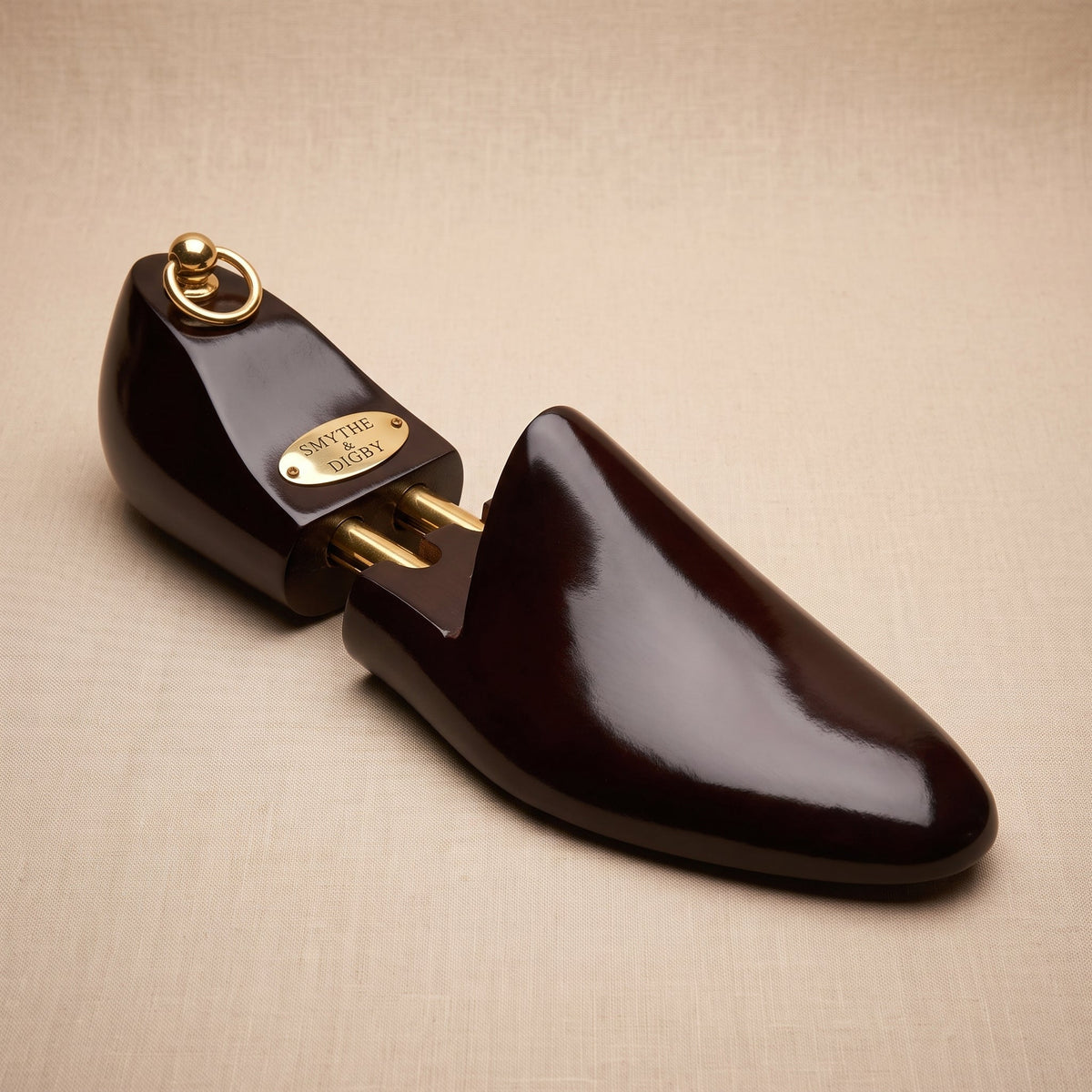
Cedar does a second job while it holds that shape. It draws moisture and odor out of the lining and leather as the shoe rests. Plastic trees hold the shape just as well but absorb nothing, which is the difference that matters for daily care. The shoe rests, the tree works.
Which material to choose
Cedar is the best all rounder for daily care. It absorbs moisture, it smells clean, and it is light enough to leave in the shoe between wears. When the scent fades after a year or so, a quick sanding refreshes the surface.
Plastic trees are the travel answer. They hold the shape, they weigh almost nothing, and they cost little. They absorb no moisture, so they are a stand in for a trip rather than a replacement at home.
Spring loaded metal trees adjust to length and fit a range of sizes, which makes them handy when one tree must serve several pairs. Check the fit before leaving them in, since a tree cranked too tight will press the leather out of shape over time.
Lasted trees, cut to one shoe's exact shape, are the ideal and the most expensive option. A good generic cedar tree in the right size covers most pairs well, and it is where most people should start.
Oxfords and derbys
Laced dress shoes show their age across the vamp, right where the foot flexes. Trees matter most here because the leather is structured and every crease reads. Slip the trees in as soon as the shoes come off, while the leather is still warm and pliable, and loosen the laces first so the tree seats fully. If a tree has to be forced in, it is too large, and it will stretch the quarters and distort the facing over time.
Loafers and Belgian slippers
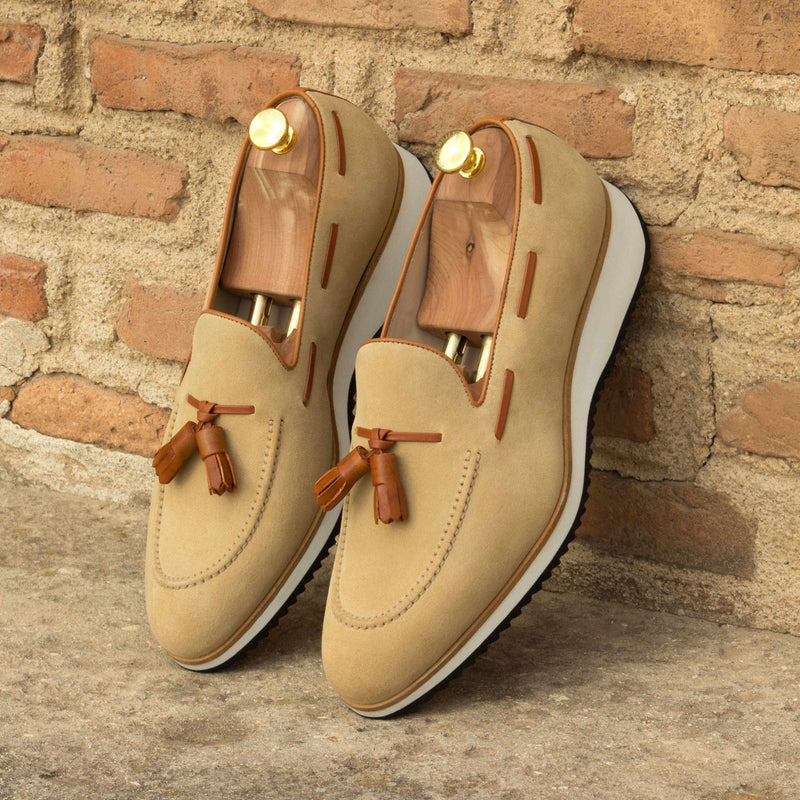
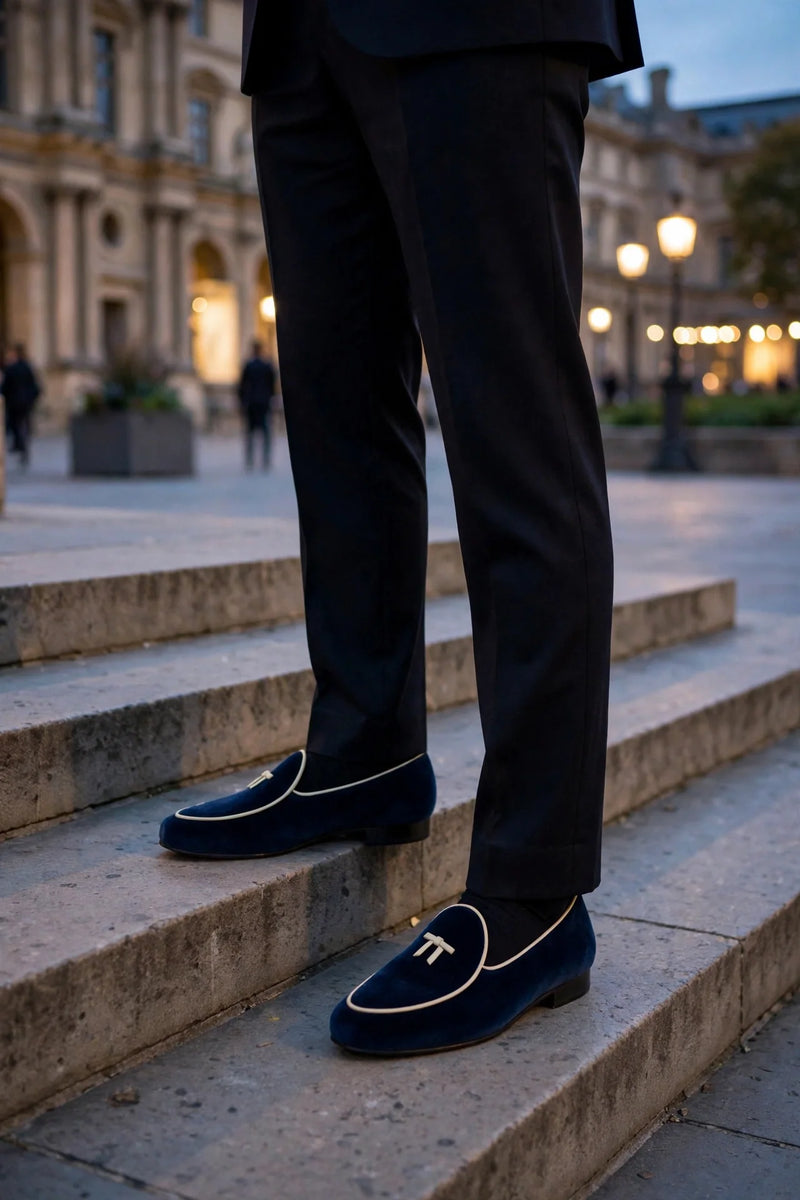
Slip-ons have no laces holding them closed, so they lose their shape faster than laced shoes when left empty. Velvet slippers are the clearest case. The vamp collapses, the pile crushes unevenly, and the shoe starts to look tired long before the velvet wears out. A snug cedar tree holds the vamp smooth while the shoe rests. Do not force an oversized tree into an unlined slipper, since it will stretch the velvet and spoil the fit. For suede Belgians, the same tree keeps the apron seam sitting flat and the shape true.
Boots
Boots carry more leather and more moisture than shoes, and the shaft adds a second problem. A tree holds the foot shape, vamp and toe box, the way it does in any shoe. Store the boots upright so the shafts do not fold over, since a tree cannot hold a shaft straight on its own. For tall shafts, a boot shaper or light stuffing keeps the leather from creasing where it bends.
Sneakers and casual shoes
Leather trainers crease and hold sweat just like dress shoes, and a cedar tree answers both problems the same way. Canvas sneakers gain less from a tree, since canvas does not hold a crease the way leather does, but a tree still keeps them from collapsing in a stack. For soaked shoes of any kind, let them air dry away from direct heat first, then insert the trees. Heat dries leather fast and cracks it faster, and no tree undoes that damage.
How to use them well
Insert the trees right after wear, while the leather is still warm. Leave them in at least overnight, and ideally until the next wear. Buy the right size, one tree per pair, and check that the tree fills the shoe without forcing it. Give shoes a day off between wears when you can, since rest is when the trees do their work and the leather recovers.
What to avoid
The common mistakes are all versions of the same error, which is forcing the wrong fit. A tree that is too large stretches the shoe. A spring tree left cranked tight for weeks presses the leather out of shape. Direct heat while drying cracks leather that trees cannot repair. And a tree does not change fit. A shoe that pinches when new will still pinch with a tree in it, so buy the fit first and let the tree protect it.
To build a pair worth looking after, Design Your Pair in the Smythe and Digby studio, where the velvet loafer and Albert build to your own specification.
Frequently asked questions
Do shoe trees really make shoes last longer
Yes, by holding the shape and drawing out moisture, the two things that age leather fastest. A tree will not rescue a shoe that is already cracked, but it slows the wear that causes cracking in the first place.
Cedar or plastic shoe trees
Cedar for daily care, because it absorbs moisture and odor. Plastic for travel, because it is light and holds the shape.
Should you leave shoe trees in all the time
Between wears, yes. Take them out only to wear the shoes, and put them back as soon as the shoes come off.
Do velvet slippers need shoe trees
Yes, and they benefit more than laced shoes do. Slip-ons lose shape fastest, and a snug tree keeps the vamp smooth without stretching the velvet.
Can a shoe tree stretch a shoe that is too tight
No. A tree holds the shape a shoe already has. It does not change the fit, and forcing an oversized tree in will distort the shoe.