Velvet Loafers: The Complete Guide

Velvet loafers occupy a unique place in menswear: they combine the relaxed comfort of the loafer silhouette with the luxurious texture of velvet, a fabric historically reserved for eveningwear and formal occasions. This guide covers everything you need to know about choosing, wearing, and caring for velvet loafers, from their storied history to practical styling advice.
A Brief History
The velvet loafer emerged in the early 20th century as a staple of the gentleman's informal evening wardrobe. Unlike the patent opera pump, which dominated black-tie events, the loafer offered a more relaxed alternative without sacrificing elegance. The addition of velvet — with its soft, raised nap — transformed the shoe from simple leather into a statement of texture and sophistication. Vintage photographs from the 1920s and 1930s frequently depict velvet loafers at garden parties, weekend country weekends, and intimate evening gatherings.
Style Families and Variations
Velvet loafers come in several silhouette families, each with distinct characteristics:
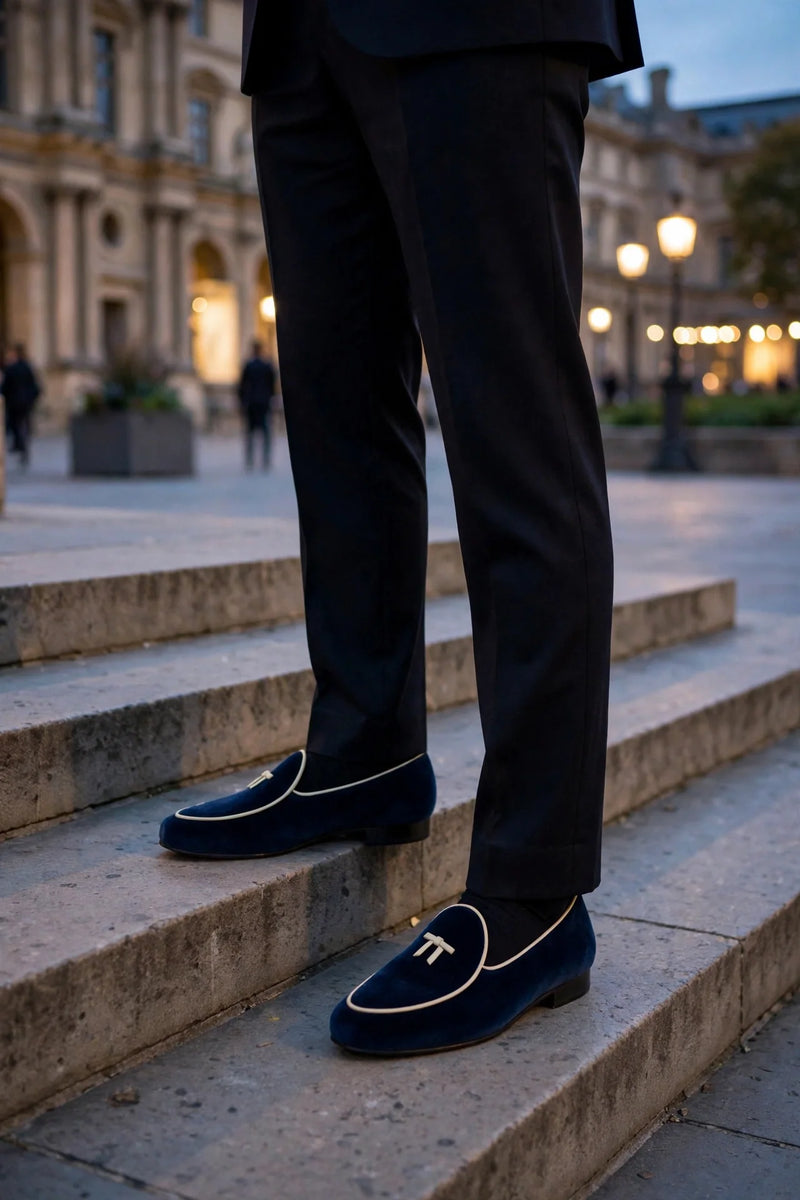
- Albert slippers: featuring a vamp strap or tie, often with an embroidered crest or motif, these are the most formal velvet loafer and are traditionally worn with morning dress or black tie.
- Wellington styles: featuring a broader, more robust silhouette with a slightly higher throat, suitable for both day and evening depending on the velvet shade and trim.
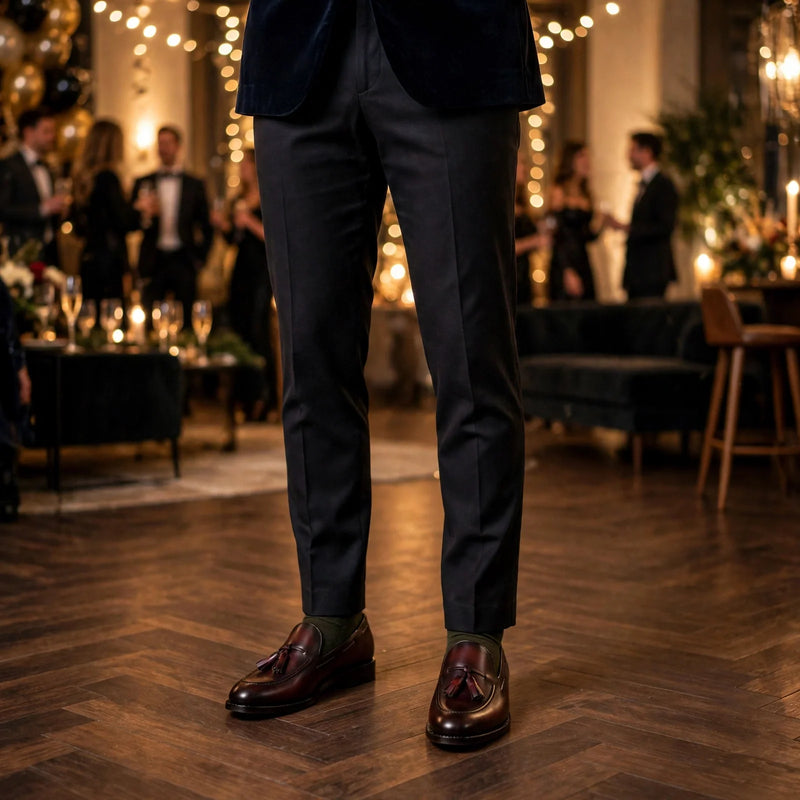
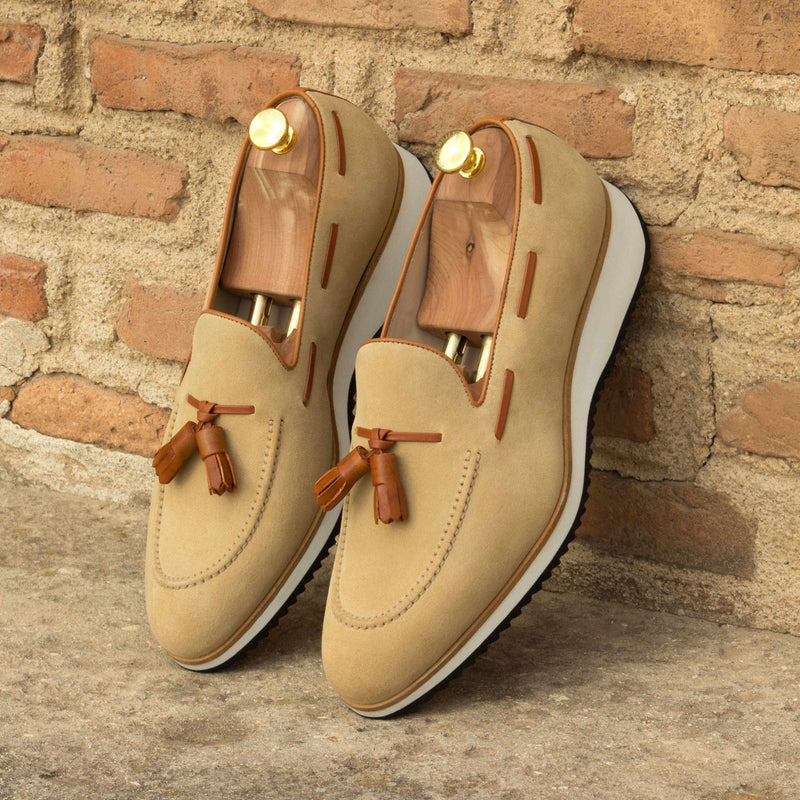
- Tassel loafers: incorporating decorative tassels at the vamp, offering a more playful take on the velvet aesthetic while maintaining elegance.
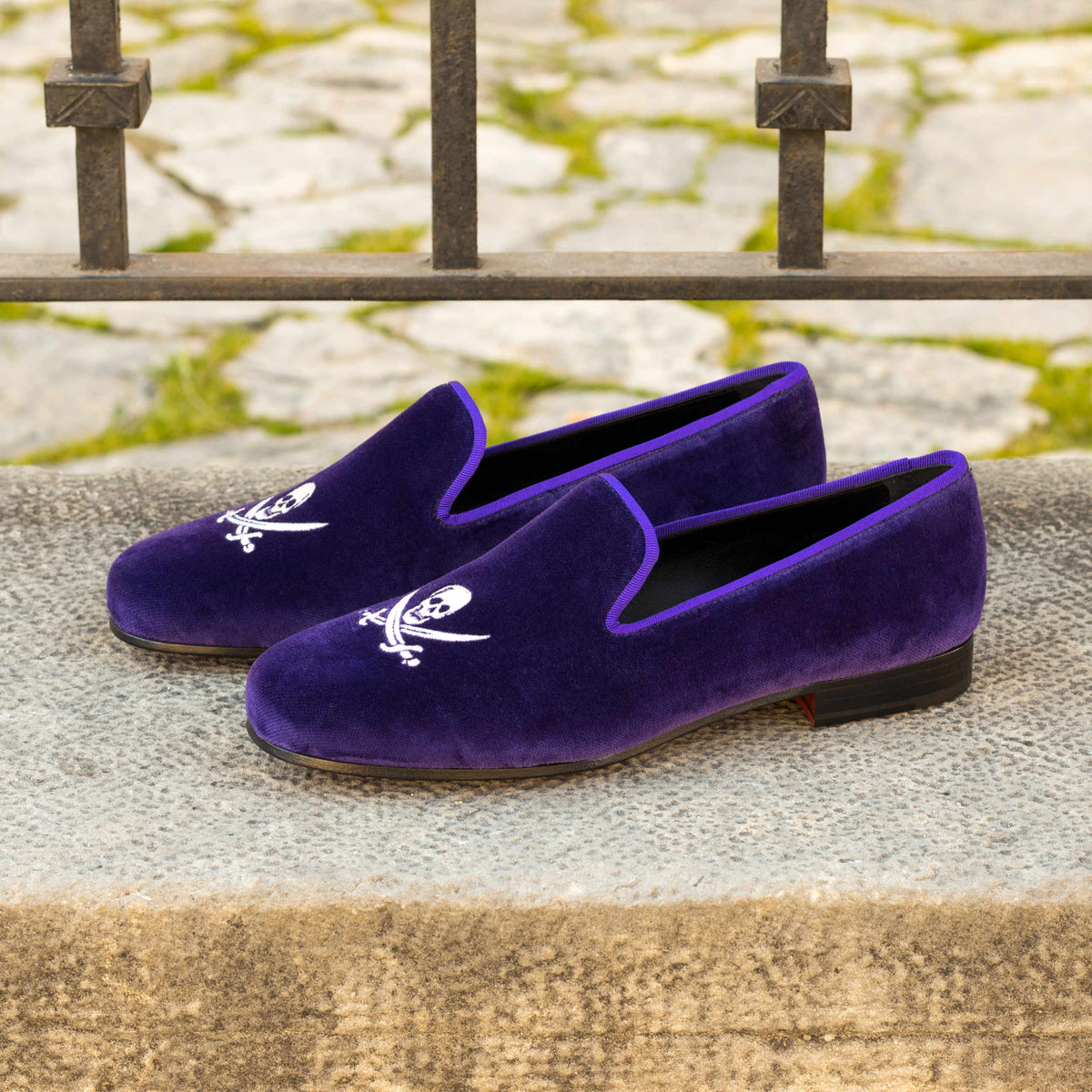
- Plain slip-on: the most versatile velvet loafer, appropriate for smart-casual to semi-formal occasions when paired with the right outfit.
Styling Guidelines
When styling velvet loafers, the guiding principle is that velvet is a textural fabric that reads best in relatively simple settings. The shoe's richness should be the focal point, and the outfit should complement — not compete with — that texture.
- Colour discipline: Dark, saturated velvets (midnight navy, deep burgundy, forest green, aubergine) read as formal and sophisticated. Pale or pastel velvets risk reading as costume or novelty.
- Let the trim do the talking: Grosgrain binding around the collar or vamp edge is the detail that signals the shoe was designed for its intended occasion. Matching or subtly contrasting grosgrain elevates the shoe; absent trim, the silhouette reads more casually.
- Mind the break: A slight or nonexistent trouser break allows the shoe to be visible and catch light as you move. A deep hem that swallows the shoe diminishes the entire effect.
Occasions
Velvet loafers are most appropriate for:
- Evening events with a black-tie or creative black-tie dress code
- Wedding receptions, particularly evening portions
- Garden parties and outdoor evening gatherings in cool weather
- Holiday celebrations and New Year's events
- Smart-casual office environments with a relaxed dress code
Care and Maintenance
Velvet requires gentle care to maintain its characteristic nap and colour:
- Brush gently with a soft velvet brush to remove surface dust and restore nap direction.
- Store on cedar shoe trees to maintain shape and absorb moisture.
- Address stains promptly with a velvet-specific cleaner; avoid harsh chemicals.
- Rotate pairs to allow velvet to recover its nap between wears.
Made-to-Order
All S&D velvet loafers are made to order, meaning each pair is uniquely crafted for one customer. The process:
- Specify velvet colour, collar trim, and vamp treatment (plain or crested) in the design studio.
- The spec is confirmed with you before anything is cut — no rack, no inventory, no compromise.
- Production takes 4–6 weeks from confirmation to delivery.
- One customer, one pair: the made-to-order model ensures your shoes are unlike any other.
Frequently Asked Questions
— The Atelier