Take the smaller size, as long as your toes have room. That is our general rule across the range, from Belgian slippers to Oxfords to boots. Good leather stretches and molds across the width and over the instep, settling into a comfortable fit. A shoe that starts too big will not shrink, and the extra room lets your heel slip and rub. The rule bends by shoe type, and the details matter, but the length rule never bends. If your toes touch the front in the smaller size, take the larger, because leather does not stretch in length.
Why does every guide seem to say size up
The generic advice is built for sneakers and shops with returns. Feet swell through the day, a tight shoe hurts at once, and a bigger sneaker can be fixed with an insole or a thicker sock. It is sensible advice for a shoe you can send back. It is less useful for a shoe made to your order, where the fit has to be right before the leather is cut.
The general rule, and why it holds
High quality leather gives with wear, almost all of it across the width and over the instep. Fitters generally find it gives a quarter to a half size. Start snug and the shoe settles around your foot. Start loose and it only gets looser, because nothing in the making will pull it back. That is the whole of it. A shoe that fits on day one by being a little generous has nowhere good to go.
How the rule bends by shoe
It varies from shoe to shoe, and the variation is the point.
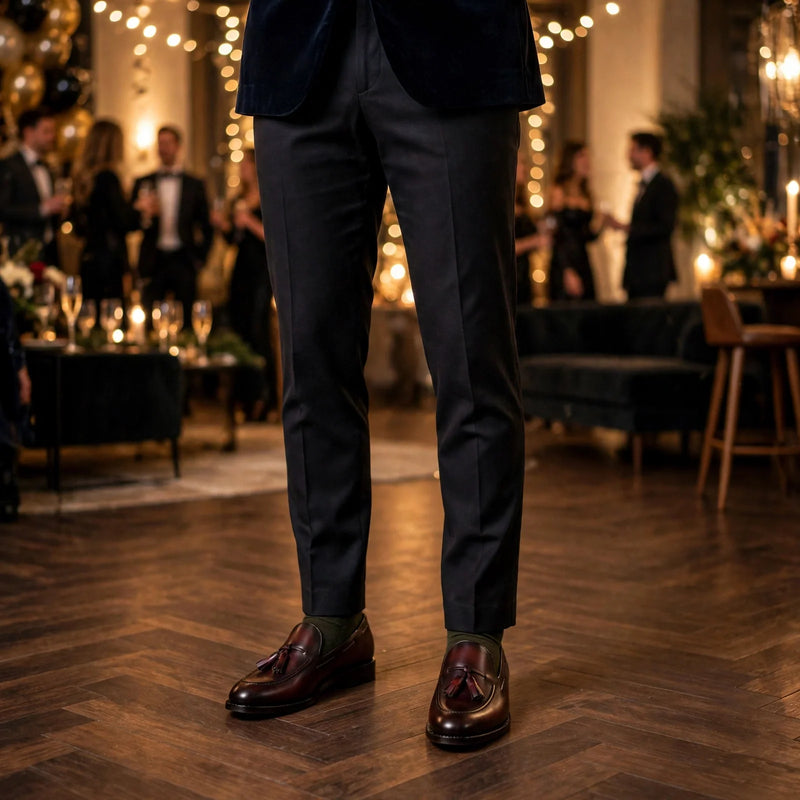
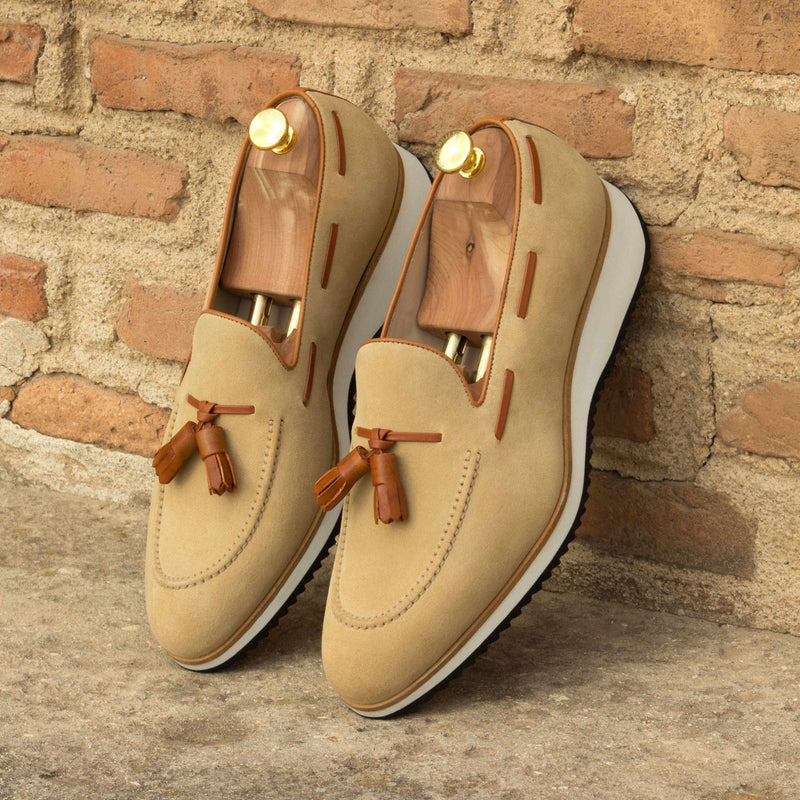
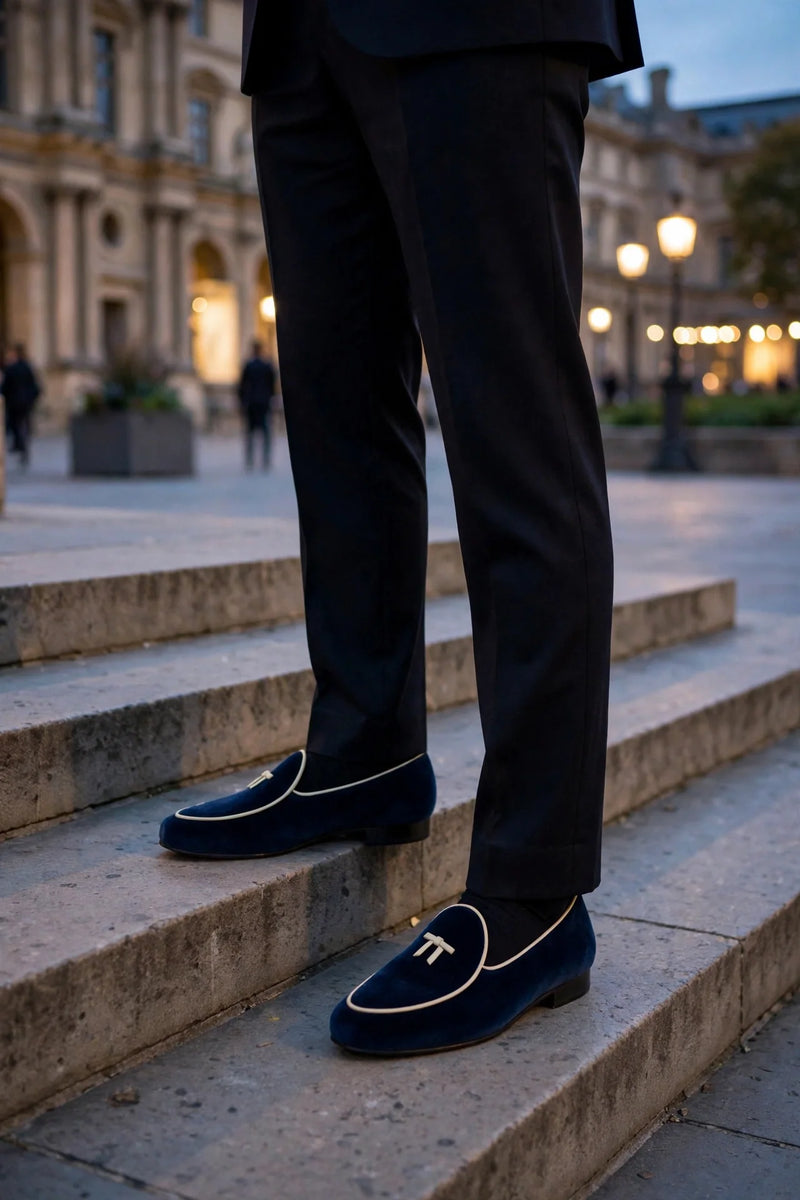
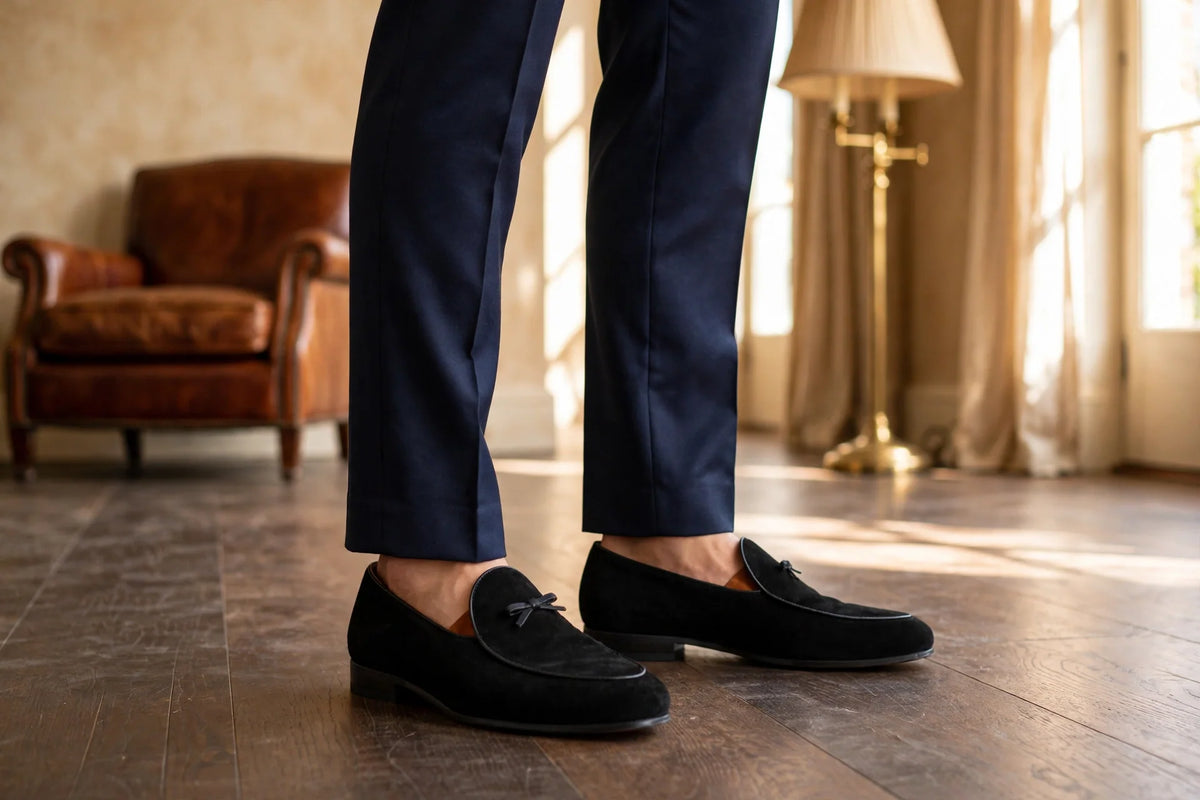
Slip-ons, Belgian and Albert. This is where the smaller-size rule is strongest. A loafer has no laces to tighten. The vamp and the heel are the only things holding the shoe on your foot, so the fit has to come from the shoe itself. Roomy on day one means sloppy by week two.
Lace-ups, Oxford and derby. Laces let you fine-tune the fit across the top of the foot, so the smaller-size rule matters less here. You can take up some slack with the lacing. The length rule still holds. Toes touching the front means the larger size, laces or not.
Boots, Chelsea and the rest. Boots are the exception. A boot is built to be worn with a sock and to hold the ankle, so the usual guidance runs the other way and leaves room for the sock you will actually wear. Size a boot for that sock. The length rule still holds.
Materials. Suede softens fastest, so it forgives a snug fit sooner. Polished leather takes longer to give, but it still gives across the width. Velvet gives less than either, so on a velvet slipper the molding comes from the shoe as a whole settling around your foot, the lining and the footbed taking your shape over the first wears. Same rule, different speed.
What about the heel
This is where the bigger size quietly fails, whatever the shoe. A shoe that starts too large lets the heel lift with every step, and that repeated rubbing is what causes blisters and abrasion at the back of the heel. The heel should sit snug, not slip. A little movement in a brand new shoe is normal and fades as the shoe softens. A heel that pops out with every step means the shoe is too big.
How do you get it right before the cut
Measure both feet in the evening, when feet are at their largest, standing with your weight on. Order for the longer foot. Match your length in the chart, then your width. If your measurement falls between sizes, take the smaller, provided your toes have room in it, and allow for the shoe type and the sock you will wear with it. Then confirm before the cut, because each pair is made to the size and width you confirm. Our sizing guide walks through the measuring, and you can Design Your Pair once your size is settled.
Questions, answered
What if my toes touch the front in the smaller size?
Take the larger. Leather gives in width, not in length, and no amount of wear will make a short shoe longer.
Do boots follow the same rule?
No. Boots are the exception. Leave room for the sock you will wear with them, and size for that sock. The length rule still holds.
Does suede stretch more than polished leather?
Suede softens faster, so it forgives a snug fit sooner. Polished leather takes longer to give, but it still gives across the width. The smaller-size rule holds for both, and the length rule holds for both too.
What about lace-up shoes?
Laces let you fine-tune the fit across the top of the foot, so the smaller-size rule matters less there. The length rule still holds. Toes touching the front means the larger size, laces or not.
My two feet are different sizes. Which do I order for?
The longer one. Most people have one longer foot, and the shorter foot is content in the shoe that fits the longer one. The reverse is never true.