This week's footwear feed is having a hardware moment. The pair back on everyone's screens — resurfaced through Google News nearly a decade after it first dropped — is NOAH's suede bit loafer: hand-stitched in the USA from Horween suede, a metal snaffle bit set across the vamp, the whole drop capped off with a tricolor trail oxford. And it didn't come alone. The celebrity pages spent the same stretch of days circling the same piece of metal: Jodie Foster in Gucci's horsebit loafers, Katie Holmes in horsebit loafers of her own, with affordable lookalike roundups published before the week was out. When one shoe detail shows up three times in a week, it isn't coincidence — it's the pendulum swinging back toward hardware. And every time it swings, we ask the same question over here at the atelier: should decoration be something you bolt on, or something you build in?
First, the drop itself, because it's worth understanding why this particular pair keeps getting rediscovered. NOAH built its bit loafer the old way: American-made, hand-stitched, Horween suede over a leather sole. The brand's own note on the style is refreshingly casual for a shoe with a metal bit on it — bit loafers "shouldn't be saved for dressy occasions," especially in suede, because they "work great as an everyday shoe, worn however you want." That's the trend in miniature: the hardware loafer, once reserved for club-dress dress codes, has spent recent seasons being reframed by streetwear-adjacent labels as an everyday autumn shoe in soft suede. The internet's memory being what it is, a good drop never really dies — it just resurfaces each season and sells through again.

What a bit loafer actually is
The bit loafer's story starts in 1953, when Aldo Gucci set a metal horsebit — the snaffle from an equestrian bridle — across the vamp of a slip-on and accidentally created one of the most recognizable shoes of the century. Every bit loafer since, NOAH's included, is a riff on that move: a loafer, a piece of metal, a signature. The formula's strength and its weakness are the same thing. The hardware is fixed at the factory. You buy Gucci's bit, or NOAH's bit, or nobody's. You can choose the suede; you can't choose the signature.
The Belgian answer: decoration without hardware
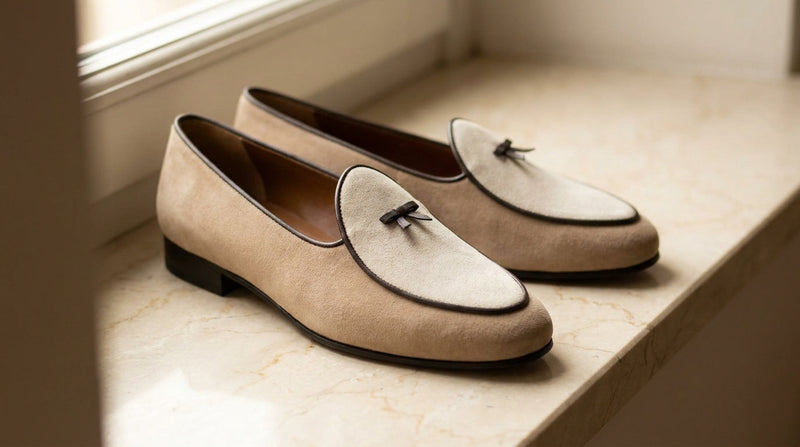
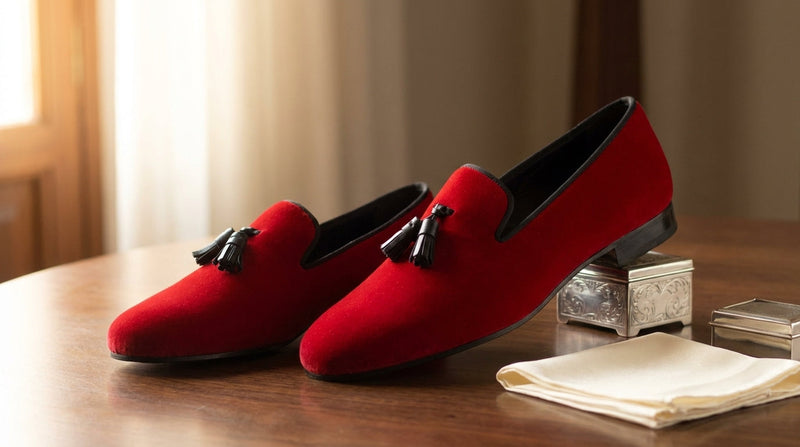
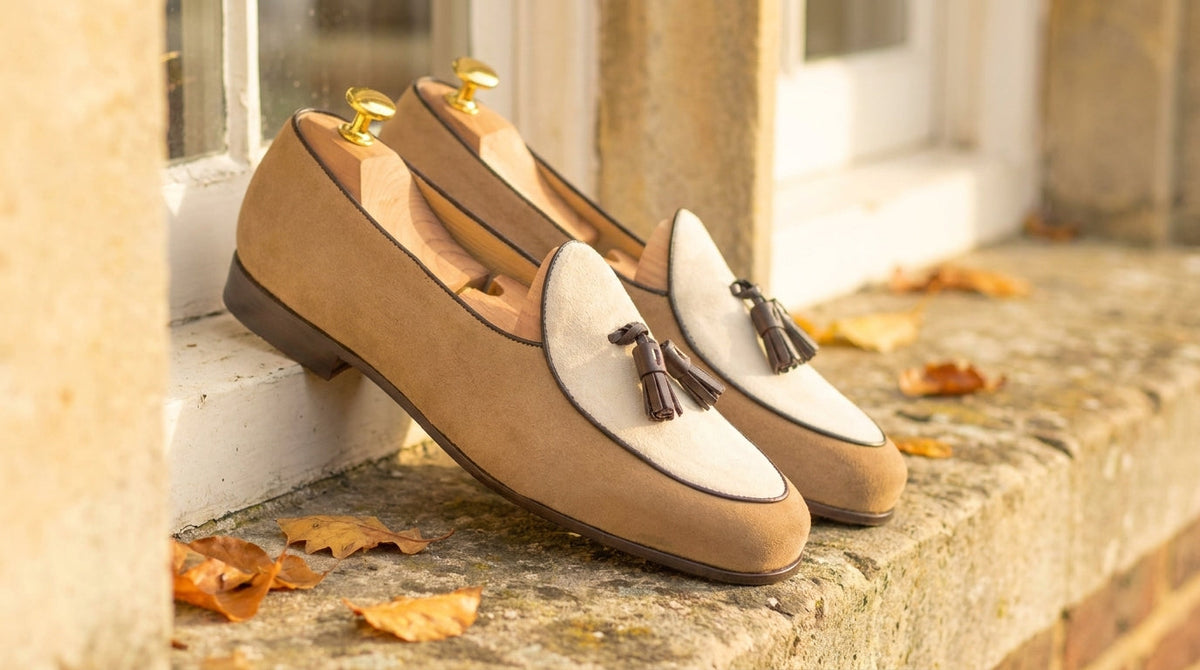
The Belgian loafer takes the opposite route. Where the bit loafer bolts metal on, the Belgian builds its flourish out of the shoe's own materials: a small flat bow — tails pointing down, toward the toe — or a pair of tassels cut from the same calfskin as the piping that traces the apron and collar. Nothing is added to the shoe that isn't already part of it. That's why the Belgian reads quieter, softer, more personal: its decoration is craft, not hardware. Underneath, it's an unstructured, hand-turned slip-on — sewn inside out and turned right-side-in so no stitch shows — on a thin, flexible sole. The pair above is our two-tone autumn take: camel suede body, ivory apron, dark brown tassels and piping.
The autumn suede argument
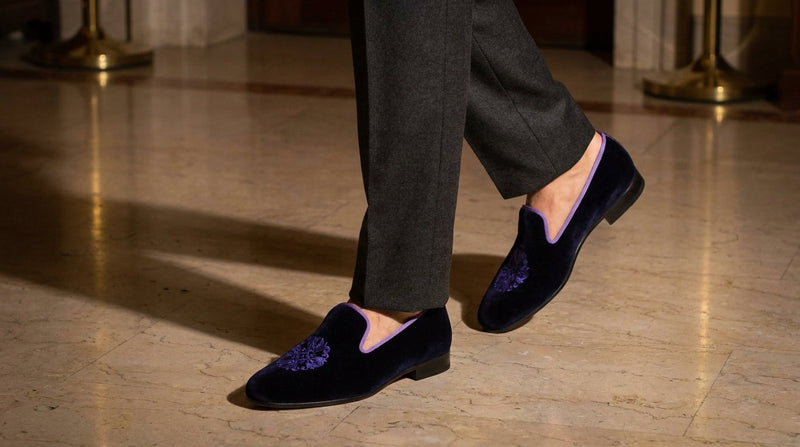
NOAH's instinct about suede is right, and it's exactly why this is a Belgian season too. Earth-toned suede is the material of the moment the second the air cools: camel, taupe, ivory, chocolate. The difference is who decides. The bit loafer comes in whatever suede its maker chose for the drop. The Belgian comes in yours — because it's made to order, one pair at a time, and the two-tone split between body and apron is the whole point of the style. NOAH's camel-and-cream sensibility and the Belgian's ivory-over-taupe construction are, tellingly, the same palette. The Belgian just lets you set it yourself — and in velvet, the same silhouette crosses into evening territory outright, which is why grooms keep finding it for weddings too.
Why made-to-order beats waiting for a drop
Here's the structural difference between riding the trend and skipping the queue. A drop is a rerun: it surfaces, it sells through, it disappears, and your only decision is whether to be quick this time. A made-to-order pair flips the sequence — in the design studio you set the body material, the apron, and the trim first, then the pair is built to that spec over four to six weeks in Spain, with the spec confirmed before the cut. No hoping a brand's calendar matches yours; no settling for the colorway that happened to ship. The drop asks you to want what it made. Made to order asks what you actually want — and then cuts the leather.
Questions people actually ask
Is a bit loafer the same as a Belgian loafer? No — they're two different philosophies of the slip-on. The bit loafer is a structured loafer with metal hardware across the vamp, in the tradition of the 1953 Gucci original. The Belgian is an unstructured, hand-turned shoe whose only decoration — a small bow with tails pointing down, or tassels — is cut from the shoe's own leathers.
Can I wear a Belgian loafer as an everyday shoe, like NOAH suggests for bit loafers? Yes — in suede, that's exactly its register. NOAH's point that a hardware loafer "shouldn't be saved for dressy occasions" applies even more to the Belgian: the construction is soft, the sole is thin and flexible, and suede reads daytime. The same shoe in velvet moves it toward evening.
Bit loafer or Belgian loafer — which should I choose? If you want a brand's signature on your foot, wait for its next drop. If you want the shoe built around your own spec — body, apron, trim, made one pair at a time — the quiet answer is Belgian loafers, made to order.