New loafers break in with short indoor wears, not one long day out. Wear them around the house for 30 to 60 minutes, protect suede or velvet before the first outing, and brush the nap back up after each wear. Most loafers settle in one to two weeks. Sharp pain is not breaking in, it is a warning.
FLANNELS published its Autumn 26 shoe guide on October 27, and its loafer verdict is plain. Summer made loafers a favourite, and autumn keeps them in rotation, only darker, in chocolate, burgundy, and deep black. That is good news for a new pair, and a reason to get the first week right. A loafer that has been worn in properly looks like it belongs with heavier trousers and a coat. A loafer that has been forced does not.
The heel was stiff, the vamp had other ideas. That is the normal first wear, and it is fixable, provided the shoe itself is sound. What follows is the routine that works, step by step, with the material split where it matters.
How long does it take to break in loafers
Plan on one to two weeks of regular short wears. Three things change in that time. The upper softens where your foot bends, the sole finds its flex point under the ball of your foot, and the footbed settles into your shape. Wearing a new pair every other day, indoors first, gets you there faster than a single heroic outing, which only teaches your feet to dread the shoes.
Smythe and Digby makes each pair to order, and standard production runs 4 to 6 weeks. That wait is the reason to break a pair in before the occasion, not on the day of it.
How do you break in loafers without pain
Start at home. Wear the loafers for 30 to 60 minutes on carpet or a rug, with slightly thicker socks than usual. The socks cushion the rub points and help the upper give a little. When the time is up, take them off, even if they feel fine. Short sessions, repeated, do more than one long one.
Protect the heel before it complains. A strip of moleskin on a known rub point, heel or ankle, beats a blister every time. If the heel slips while the back is still stiff, a heel grip inside the shoe stops the movement that causes the friction.
Rest the pair between wears. A day off lets the material dry and reset, and it keeps the break in even. Rotate in another pair while you wait.
What should you never do to new loafers
Do not soak them, do not freeze them in ice bags, and do not blast them with high heat. Each of those shortcuts risks warping the sole, cracking the leather, or marking the nap in a way that does not come back. Do not put suede or velvet in a washing machine. The slow way is the only way that keeps the shoe intact.
Brush after every wear. A suede brush lifts surface dirt and revives the nap, and a soft brush does the same work on velvet. Five minutes at the door, and the pair keeps looking new while it gets more comfortable.
Which routine fits a suede loafer
Suede wants protection before polish. Spray a suede protector over the upper before the first outing and leave it to absorb overnight. After each wear, brush in one direction to lift the nap and clear surface dirt. For a scuff, a suede eraser usually does the job, and a little steam from a kettle, held at a distance, helps the brush reach the nap.
Keep suede away from heavy rain when you can. If a pair does get wet, blot the water, never rub, and let the shoes dry slowly at room temperature, away from heat. Once they are fully dry, brush again.

Which routine fits a velvet loafer
Velvet wants a lighter hand. Brush it gently before the first wear and after each one, and keep it dry. If a mark appears, blot it with a soft cloth rather than rubbing, and test any cleaner on a hidden spot first. For a deeper clean, a professional who handles delicate fabrics is the safer call than a home experiment.
Velvet rewards patience. On purpose. The pile keeps its sheen when it is brushed and rested, and it flattens when it is pressed while wet or worn day after day without a break.

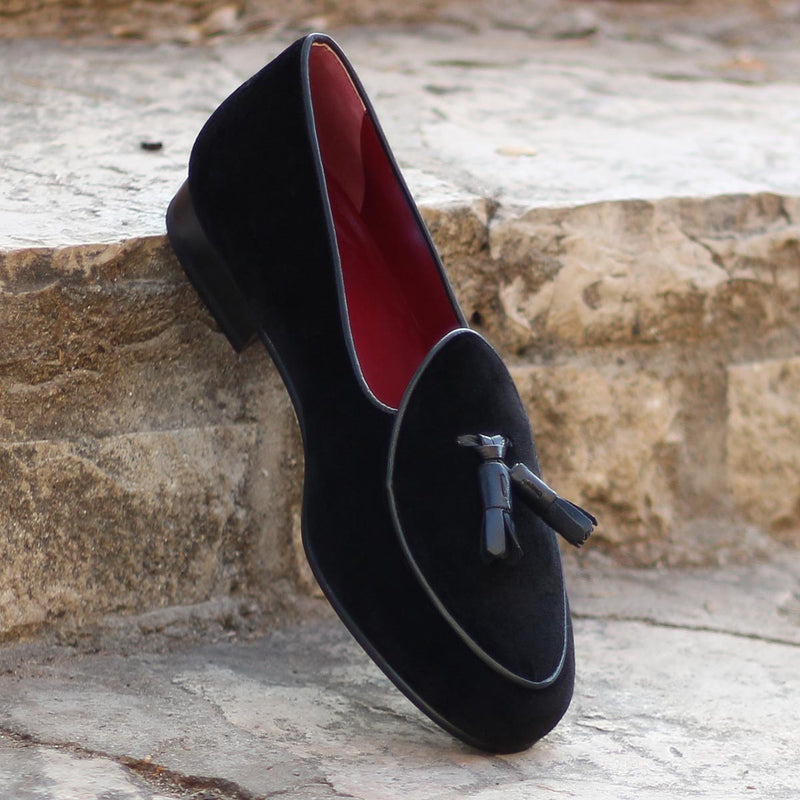
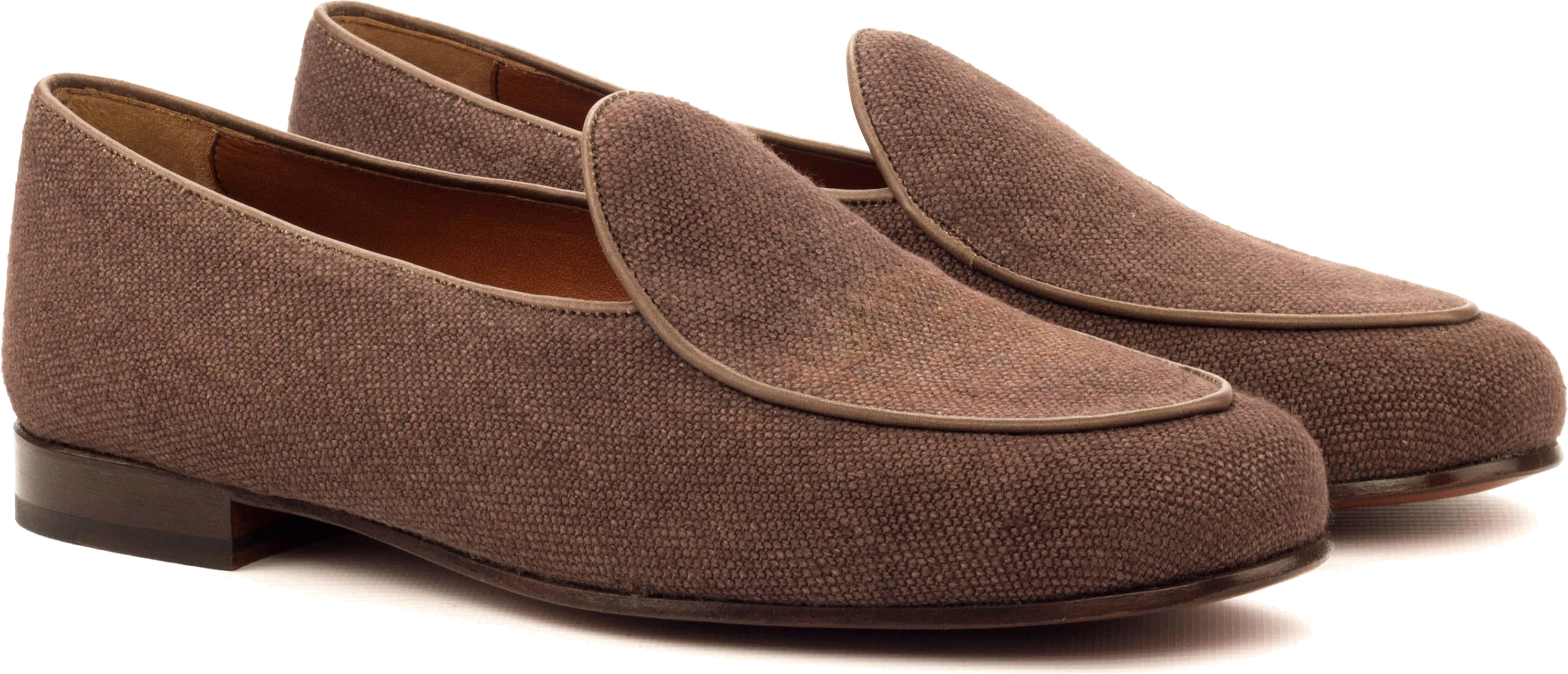
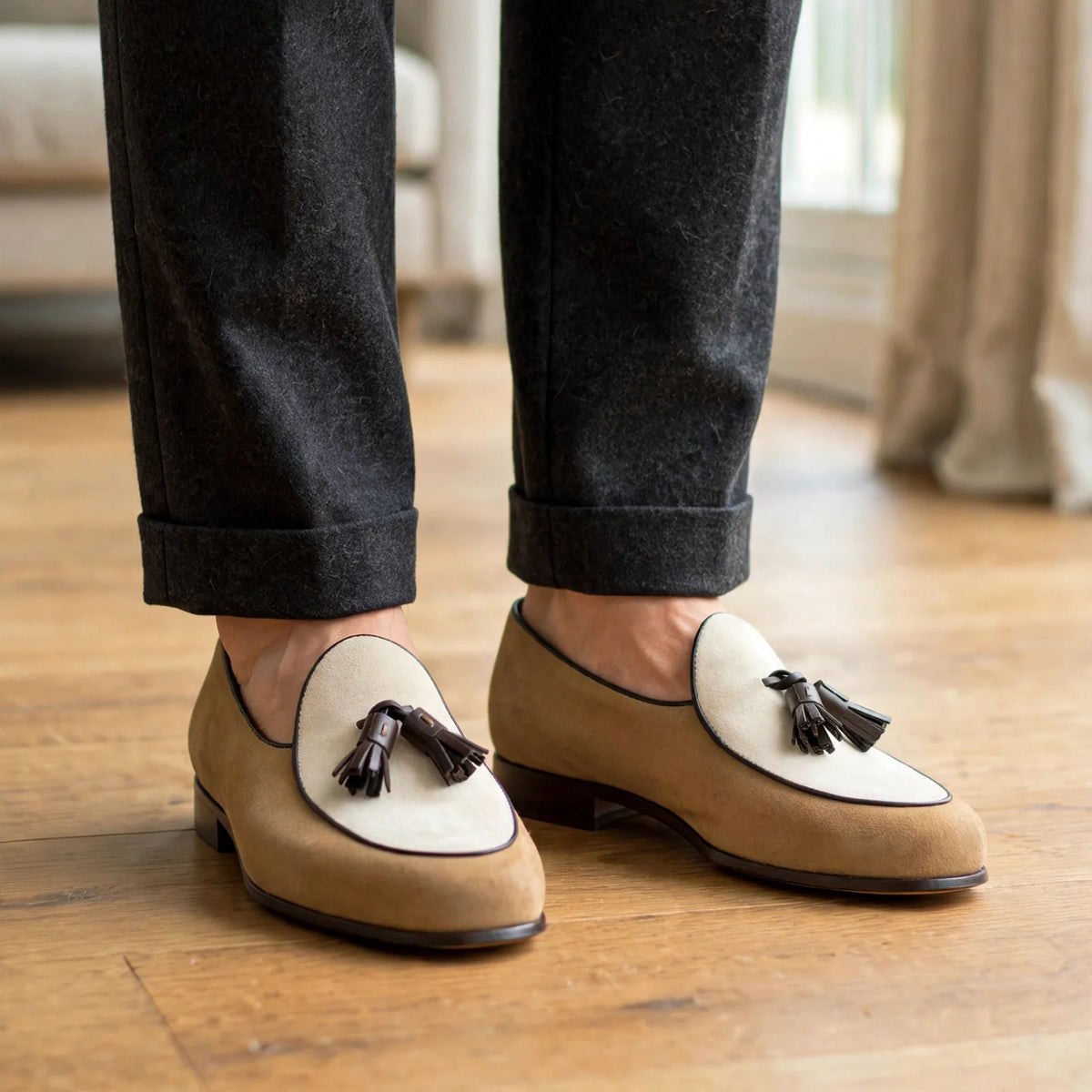
The two picks above are the same shape in two moods, suede for daytime texture and velvet for evening. Both are Belgian slippers, and both break in on the same schedule, short wears, brushing, and rest. The Belgian page carries the full range at Belgian slippers, and either pair starts from the same place, Design Your Pair.
Frequently asked questions
How long does it take to break in loafers
Most loafers settle in one to two weeks of regular short wears. Wear them indoors for 30 to 60 minutes at a time, rest them a day between wears, and expect the upper to soften where your foot bends and the sole to find its flex point.
Can loafers be stretched
A shoe stretcher left in overnight can ease a snug loafer, and it works best on leather. It will not add length, and it will not turn a wrong pair into a right one. Suede and velvet need a gentler hand than leather, so stretch those only lightly, if at all.
How do you break in loafers without pain
Wear them indoors first, in slightly thicker socks, for short sessions. Put moleskin on any rub point before you walk, add a heel grip if the heel slips, and stop before pain starts. Pain is a sign to change the approach, not to push through.
Can you wear new loafers in the rain
Avoid it while a pair is breaking in. Suede and velvet both mark when wet, and a wet break in teaches the shoe the wrong shape. If you are caught out, blot the water, dry the shoes slowly at room temperature, and brush the nap once they are fully dry.