Brush them dry, never soak them, and protect them before the first wear. Suede cleans with a soft brush, a rubber eraser for marks, and a protector spray applied before the weather turns. If they get wet, let them dry on their own, away from heat, then brush the nap back up. That is the whole method.
The shoemakers are all saying it at once. Tricker's published its autumn and winter suede guide, arguing that suede, protected properly and brushed regularly, handles the cold months as well as smooth calf. Martin Dingman published its own fall and winter care guide, with the same message, that suede is tougher than its reputation and the routine is a short one. November is when the advice matters. The leaves are gone, the salt is out, and the suede you wore all autumn is about to meet its first real test.
How do you clean suede loafers at home
Start dry and stay dry. Brush the whole shoe with a soft suede brush, always in one direction, so the nap lifts and the dust comes off with it. A rubber eraser takes the marks the brush leaves behind, rubbed lightly over scuffs and darkened patches. Then brush again, in the same direction, and the nap stands back up.
Do the brushing after each wear, not once a month. The brush is cheap, the habit is the whole method. Thirty seconds at the door beats an hour of restoration in March, and the shoes that get it look new in spring while the neglected pair looks tired by Christmas.
Thirty seconds.
How do you clean suede loafers without suede cleaner
You do not need a shelf of products. A soft brush, a rubber eraser, and a clean dry cloth cover most of what suede ever asks for. For odors and light oil, sprinkle a thin layer of baking soda over the shoe, leave it for fifteen to thirty minutes, and brush it off. For salt marks, a cloth barely damp with a little white vinegar in twice as much water, dabbed on and never rubbed, then left to air dry before brushing.
Test anything new on a hidden spot first, inside the heel or under the tongue, and wait for it to dry before you judge it. Suede changes color while it is damp and settles back as it dries, so a wet patch that looks alarming at noon can look like nothing by evening.
How do you clean suede loafers without a suede brush
A clean dry cloth lifts surface dust, and a soft toothbrush reaches the seams and the edge of the sole. An eraser block handles the scuffs. Work in one direction, lightly, and let the tools do the work rather than your wrist.
What you must not reach for is a wire brush or anything with stiff bristles, which tears the nap rather than lifting it. And never use leather conditioner on suede. Conditioner is made for the smooth outside of the hide, and suede is the napped inside, so it sits on the surface and stains rather than soaking in.
What do you do when suede loafers get wet
Blot first, with a clean dry cloth, pressing gently and never rubbing. Then let them dry naturally at room temperature, away from radiators and hot air, with the shoes stuffed with plain paper to hold their shape. Do not brush them while they are wet. Once they are completely dry, brush the nap back up and the darkened patches even out.
Mud is easier than it looks. Let it dry hard, knock it off, and brush the rest away, rather than wiping it wet and pushing it into the nap. Road salt is the one to watch, since it draws moisture out and leaves a pale tidemark. Brush it off the same day and treat any mark before it sets.
A made-to-order pair takes four to six weeks to build, so a suede pair designed today arrives before the worst of the winter weather, and a brush by the door keeps it looking right through spring.
Two suede pairs worth the routine
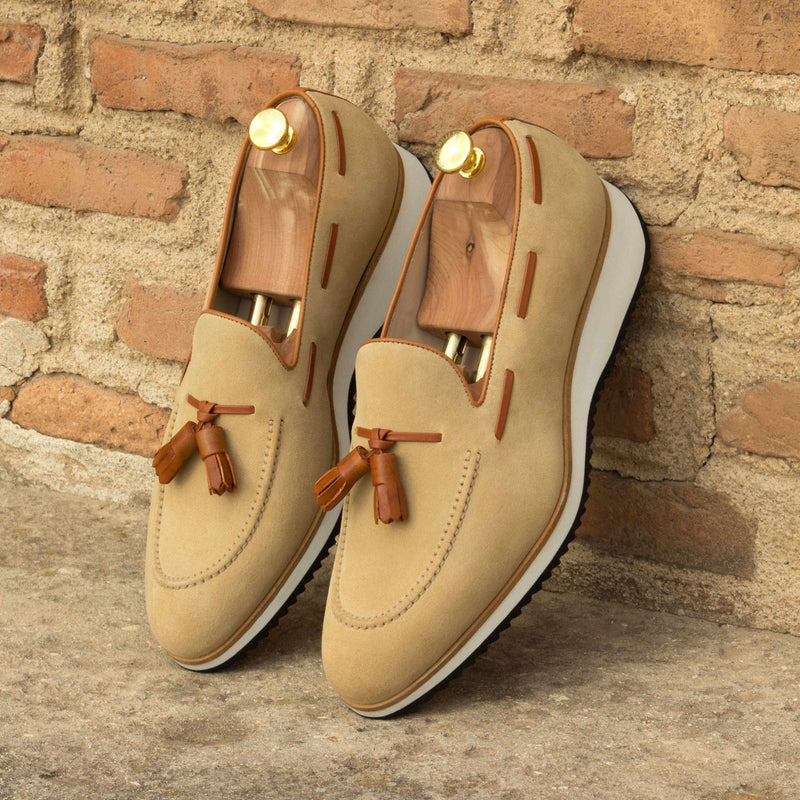
Care is only worth it on a shoe you love wearing, and these are the two we would build for a winter of suede. Both are Belgian slippers, the soft slip-on that takes suede better than any lace-up, and both come in at $325.

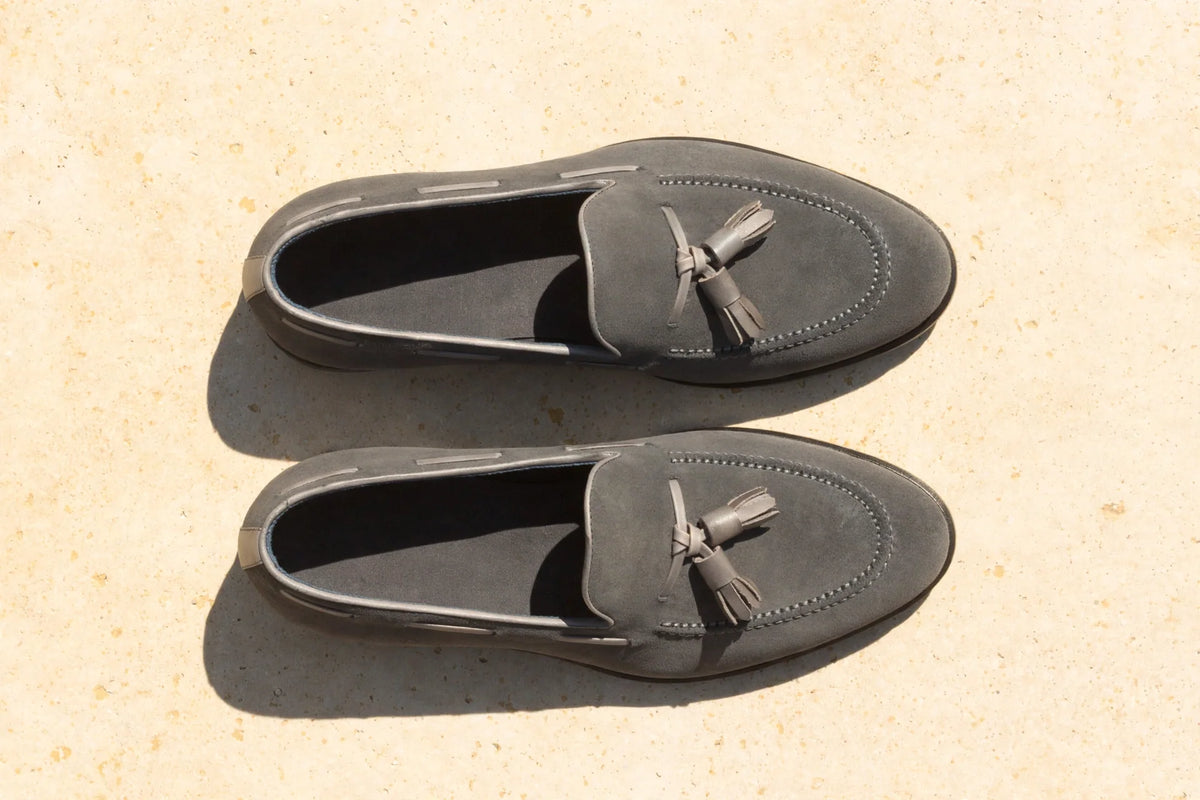
The dark brown suede Belgian is the daytime pair. Brown suede takes the cold months in its stride. It sits well against charcoal flannel and dark denim, and the black tassels keep it dressed enough for the office. This is the shoe the brush earns its keep on, worn often and brushed after every wear.

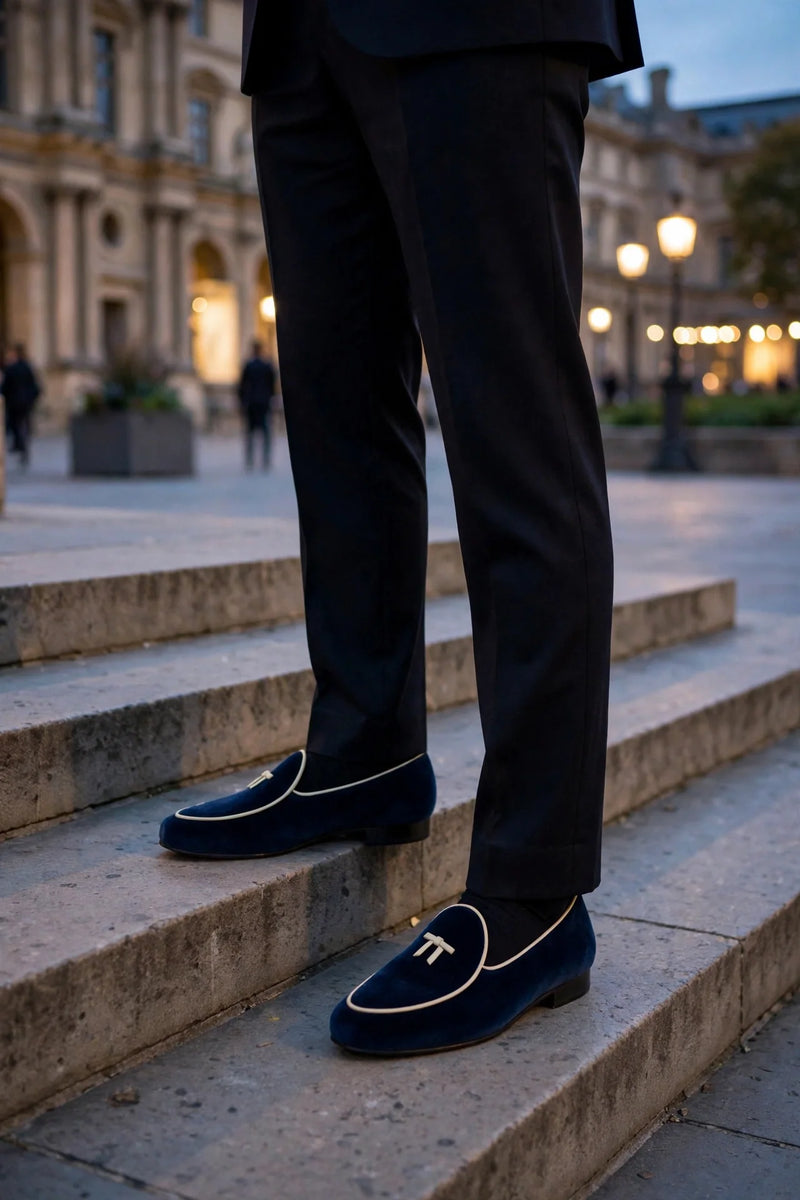
The navy suede Belgian is the evening pair. Navy reads as black under low light while keeping its own depth, and the small black bow keeps the slipper formal. It is the shoe for dinners and nights out, when the pavements are wet and the protector spray has already done its work.
Both pairs are built in the Design Your Pair studio, where you choose the style, the material, the colorway, and the vamp accessory, and both come in at $325.
Frequently asked questions
Can you clean suede loafers
Yes, with dry methods only. Brush them with a soft suede brush, use a rubber eraser for marks, and never soak them or scrub them with water.
How do you clean suede loafers with baking soda
Sprinkle a thin layer over the shoe, leave it for fifteen to thirty minutes to absorb odors and light oil, then brush it off with a soft brush. Test on a hidden spot first.
How do you clean suede loafers with vinegar
Mix a little white vinegar in twice as much water, dampen a clean cloth with it, and dab salt marks gently without rubbing. Let the shoe air dry completely, then brush the nap back up.
Can you wear suede loafers in the rain
Light rain is fine once the shoes have been treated with protector spray. Heavy rain is not, so carry the suede pair and change indoors if the forecast turns. If they do get caught, blot them, dry them naturally away from heat, and brush them once dry.