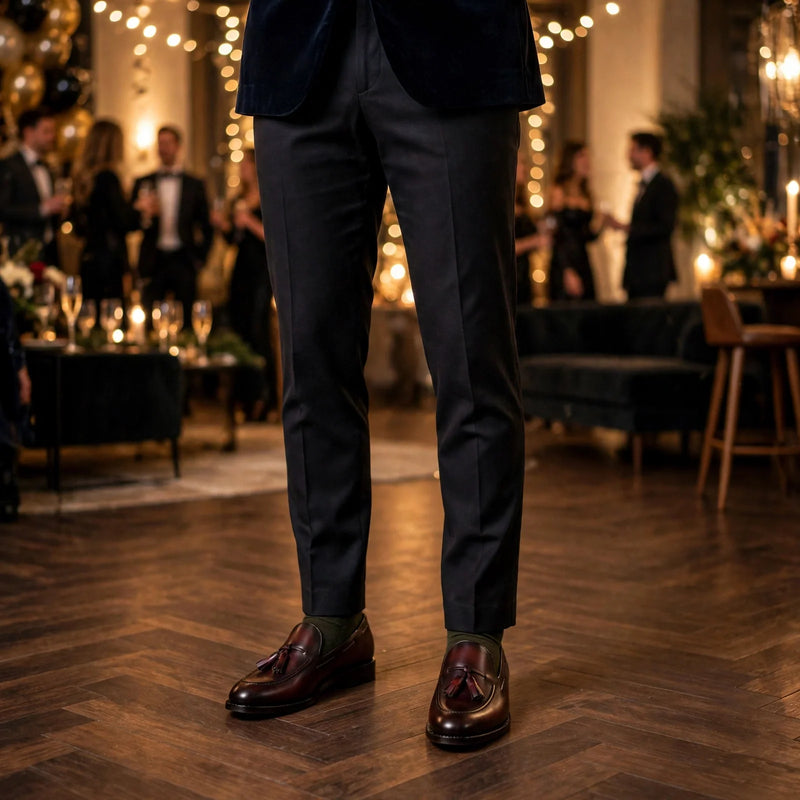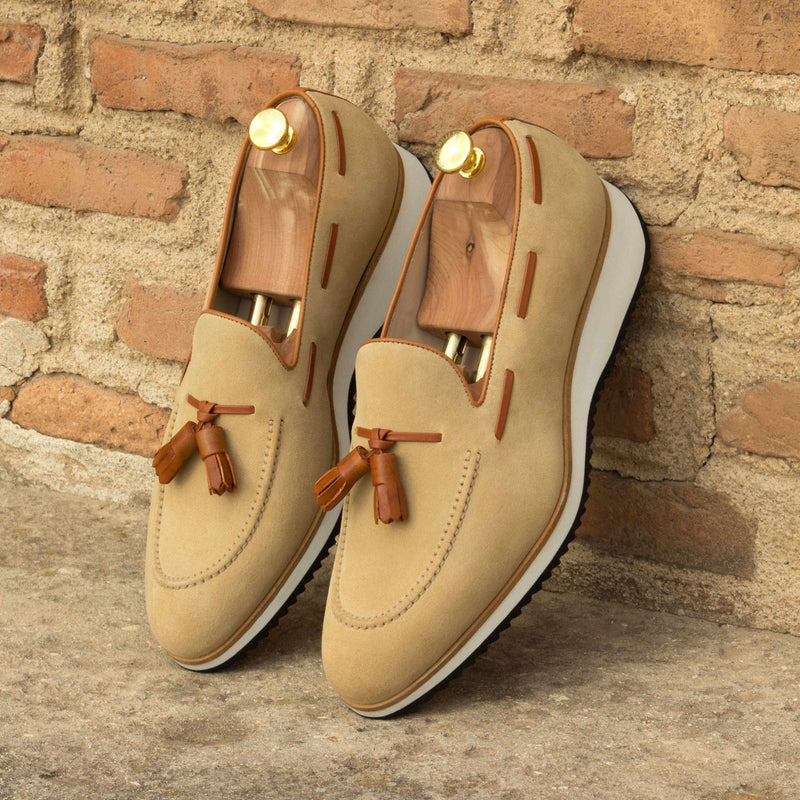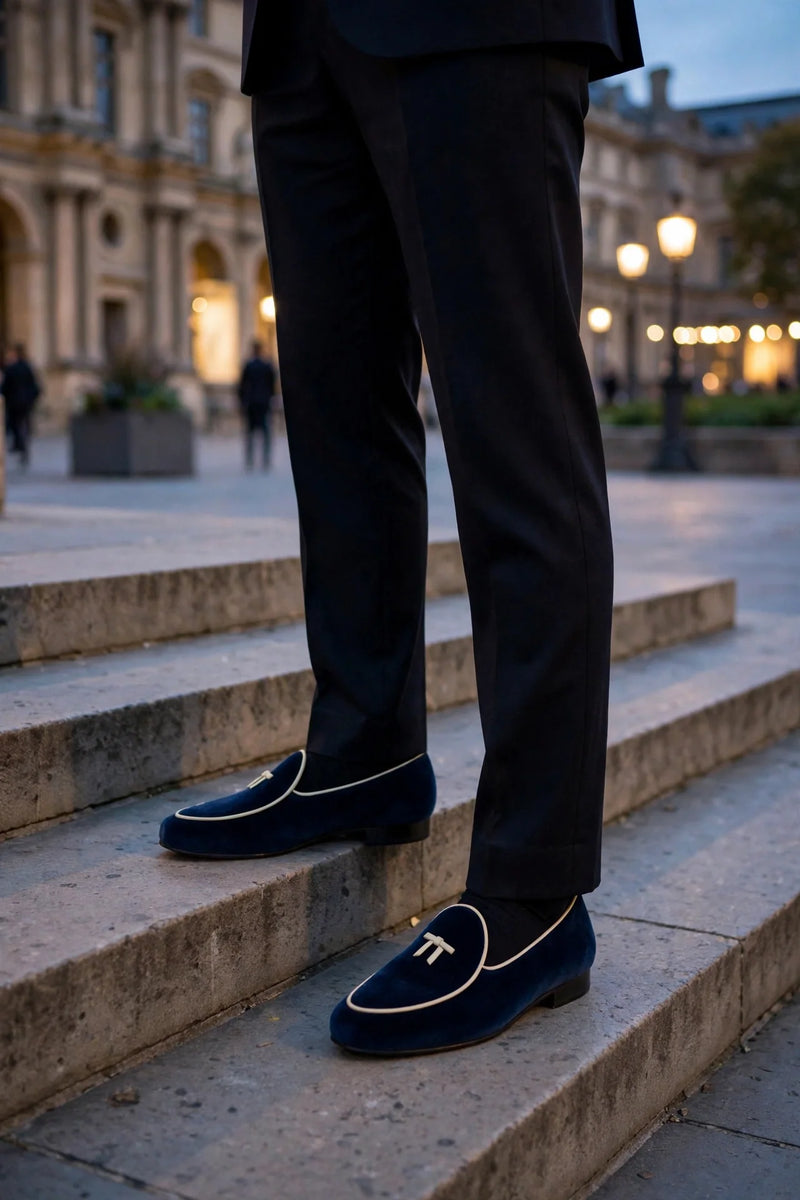

The 2026 groomsmen rule is coordination over uniformity: the wedding party should look styled together, not dressed in uniform. The easiest place to get it right is the shoes — one last, one silhouette, with color and embroidery doing the individual work. Start from the shoes, and the rest of the coordination follows.
The identical tuxedo is fading. That is the consensus coming out of the 2026 wedding forecasts: SuitCentury's trend report notes the uniform wedding party is giving way to parties that are "styled together rather than dressed in a uniform," and Joy's 2026 data names "Coordination Over Matching" as the new rule. Ties vary. Accessories vary. Even the suits themselves are starting to vary within a tonal palette.
Which raises the practical question nobody asks until the photos come back: what holds it all together?
The anchor is the shoes
A wedding party can survive a lot of tasteful variation — a different tie here, a patterned pocket square there. What it cannot survive is five different pairs of rental shoes. Footwear is the foundation of the silhouette; the eye reads it first and forgives it last. Get the shoes right and the coordination looks intentional. Get them wrong and even a perfect tuxedo looks borrowed.
This is where the old playbook actually breaks. The traditional move was simple: everybody wears the same black lace-ups. But "the same" in 2026 usually means five pairs of whatever the rental shop had left in roughly the right sizes — different lasts, different toe shapes, different levels of shine. Uniform in theory, chaos in the photographs.
One last, individual details
The coordinated answer is the opposite of complicated: one last, one silhouette, across the whole party — and let color and embroidery do the individual work.
Take the velvet Albert slipper. Cut every pair on the same last and the party reads as one unit from across the room. Then give the groom the crest — an embroidered monogram or family emblem on the vamp, his alone — while the groomsmen wear the same shoe in the wedding's tonal palette. Black velvet for a black-tie evening. Red for the bold. Navy for the coastal wedding. Same shoe, same stance, five personalities.
It is, not coincidentally, how wedding parties come together at Smythe & Digby: one last across the whole party, the groom distinguished by embroidery only he wears. Coordination, not identical.
Why made-to-order wins this game
There is a logistical argument too. A party of five means five different feet, and rental inventory was never designed for that — it was designed for the median. Made-to-order flips it: each pair is cut for its wearer, and nobody spends the reception thinking about his feet.
Order the party together, in one sitting, and the coordination is decided once — Design Your Pair side by side, same last, your palette, the groom's crest where it belongs.
FAQ
Should groomsmen wear the same shoes as the groom?
Same silhouette, yes — same embroidery, no. The 2026 rule is coordination: one last across the party, with the groom distinguished by a monogram or crest only he wears.
What shoes go with a black tuxedo in 2026?
The black velvet Albert slipper remains the definitive answer — formal enough for black tie, distinctive enough to look chosen rather than rented.
Can groomsmen wear different colored shoes?
Within a tonal palette, absolutely — that is what "coordinated, not identical" means. What breaks the look is different lasts and silhouettes, not different shades.
How far ahead should a wedding party order custom shoes?
Our pairs are made to order in about four to six weeks, so ordering the full party together two to three months out leaves comfortable room.