An oxford hides nothing. The closed lacing pulls the eyelet panels under the vamp and leaves the cleanest throat in footwear — no buckle, no tassel, no strap to talk over the shoe. The eye reads exactly three things: the leather, the line of the last, the quality of the work. That honesty is why the silhouette has outlasted trend cycles for the better part of two centuries — and it is why, when something about an off-the-rack pair quietly disappoints, there is no ornament for the flaw to hide behind. The disappointment always traces back to a decision made before you arrived: someone else's last, someone else's leather, someone else's shade of brown. Custom oxford shoes move those decisions across the counter and put them in your hands.
The decisions the rack already made for you
Buying ready-to-wear feels like choosing. Structurally, it is accepting. Every pair on a shop wall is a frozen bundle of decisions — the shape of the last, the finish of the calf, the depth of the patina, the treatment of the sole — made by a product team optimizing for the median foot and the median taste. Your job in the store is to find the box that is least wrong. The shape is right but the color is dead; the shade is perfect but the toe is rounder than you wanted; the pair is ninety percent yours, and the missing ten percent is the part people actually see. The purchase closes the argument by declaring it over.
Made to order reopens the argument in your favor. A pair is built once, to one confirmed spec, for one customer — and the interesting part of the process is not the waiting, it is the choosing. An oxford is the ideal place to learn that, precisely because it is so plain. On a shoe with no ornament, every decision reads louder.
The last is the line
The last — the sculpted form a shoe is built over — is where an oxford lives or dies. It sets the line you actually see: the sweep from throat to toe, the spring through the waist, whether the front reads almond, chisel, or round. Two cap-toe oxfords cut from the same hide can look like different species of shoe if they were built on different lasts. This is the first thing a made-to-order process puts in your hands. In the design studio you compare silhouettes side by side and commit to the line you actually want, rather than the line that happened to reach the shelf. At the far end of the same honesty sits the wholecut — an oxford cut from a single piece of leather, which we have written about separately; it is this plainness taken to its limit.
The finish is the light
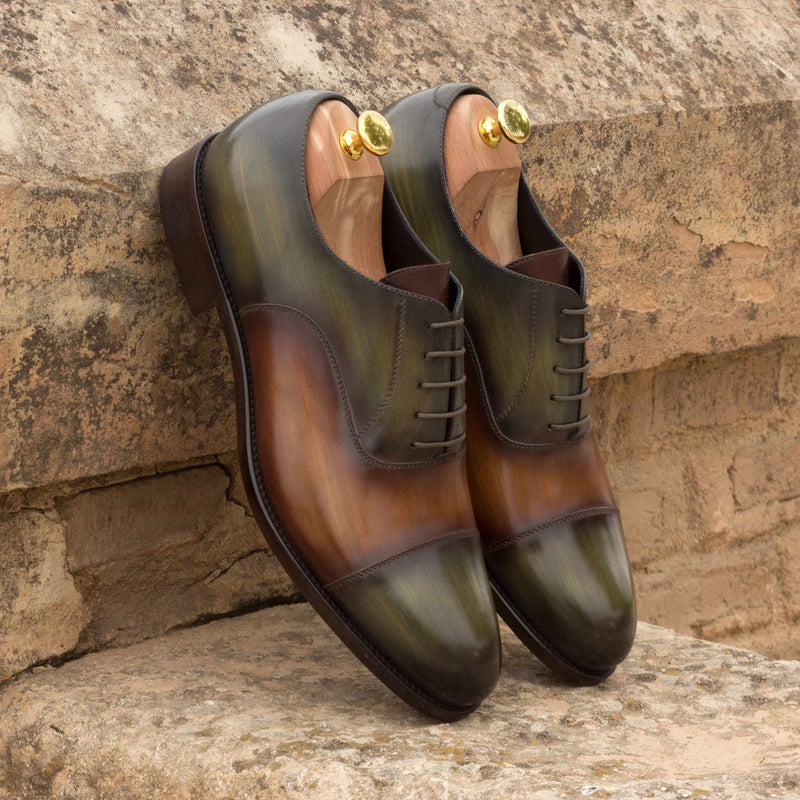
The second decision is the surface. Polished calf in black, oxblood, espresso — the safe answers, and the rack is full of them. Patina finishes are where made-to-order earns its keep: leather worked toward a gradient of color, dark at the base and lifting toward the toe, so the shoe reads one way in daylight and another under evening light. A deep indigo-violet burnish — one of the catalog's patina colorways — is exactly the pair a shop floor almost never stocks, because a store cannot bet shelf space on one man's taste. Made to order runs no such risk: the colorway is cut for one customer or it is not cut at all.
The details you will argue about for years
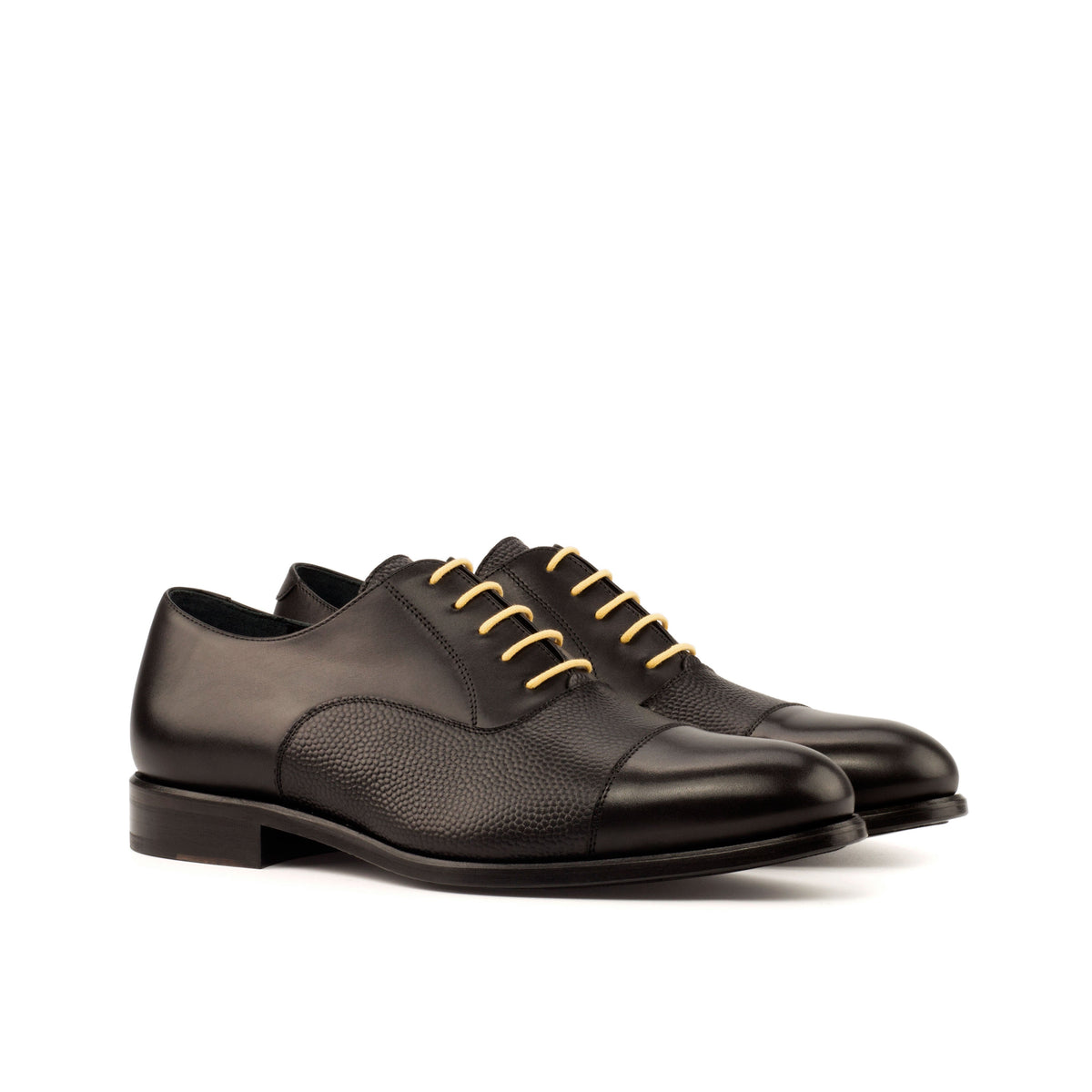
Then come the small decisions that read loudly on a plain shoe. A cap toe or a plain toe — the seam alone shifts the formality. Broguing along the seams, or none at all. The edge of the sole, dressed or left spare. Black eyelets against black laces, or a hint of metal against waxed cord. None of these choices is difficult, and that is the point: each one takes a minute in the studio and would take a store a season to stock. On a loafer, the details are decoration. On an oxford, they are architecture.
What ordering a pair actually looks like
The process is quieter than most people expect. You open the design studio, choose the oxford silhouette, and build the pair the way you want it — colorway, finish, details — with the spec taking shape in front of you before anything is committed. The full path from spec to doorstep is laid out on the order process page: the specification is confirmed before a single piece is cut, the pair is made one at a time, and the build runs about four to six weeks. What leaves the bench is built to the confirmed spec — not a near relative of it.
That last sentence is the entire value proposition, so it earns its own paragraph. An off-the-rack oxford is a compromise you learn to live with; a made-to-order pair is a set of decisions you got to make. For the plainest dress shoes in a man's wardrobe, the difference is not subtle. The oxford has always told the truth about whoever made it — custom oxford shoes let it tell the truth about the man wearing it.
Custom oxford questions, answered
What makes a shoe an oxford? Closed lacing. The eyelet panels are stitched under the vamp, so the shoe closes with a clean, shallow throat. A derby does the opposite — the quarters sit on top of the vamp — which makes it looser, easier, and less formal. The oxford's restraint is structural, not stylistic.
What can I actually change on a made-to-order oxford? The decisions this article walks through: the silhouette and its line, the colorway and finish — including patina gradients — the toe treatment, the broguing, the sole edge, the small hardware. Everything is chosen in the design studio and locked in the spec before production begins.
How long does a made-to-order pair take to arrive? About four to six weeks. The pair is built one at a time to the confirmed spec, and the confirmation step happens before anything is cut — which is what keeps the build honest.
Is a custom pair worth it over a good ready-to-wear oxford? If the pairs on the wall keep being ninety percent right, yes. Ready-to-wear asks you to accept its decisions; made to order hands you the pen. The difference compounds every time the pair is worn, because the small things you settled in the studio are the things you see each time you look down.
Where do I start? In the design studio — pick the oxford silhouette, build the spec, and watch the pair take shape before you confirm anything.