Black Suede Belgian Loafers: Why Suede Wins

Belgian loafer slippers have long been a staple of the discerning gentleman's wardrobe — the relaxed silhouette, the hand-stitched detail, the quiet luxury of a shoe that needs no logo to signal its quality. But among the many materials available, suede stands apart: it catches light with a soft, velvety depth that leather cannot match, and ages with a patina that tells a story rather than wearing away. A black suede Belgian loafer combines the best of both worlds: the timeless shape and craftsmanship of the Belgian last, rendered in a color that is simultaneously bold and understated.
Suede is derived from the underside of the animal skin, where the fibers are finer and the texture is napped rather than smooth. This unique structure gives suede its characteristic soft hand and its ability to diffuse light across its surface, creating a muted glow rather than a mirror reflection. For the Belgian loafer — a slip-on style with a low vamp and often a tassel or decorative element — suede is particularly well-suited because the shoe's modest silhouette allows the material's texture to take center stage without competition from elaborate broguing or cap-toeing.
Why Suede Commands Attention
1. Texture as Visual Interest
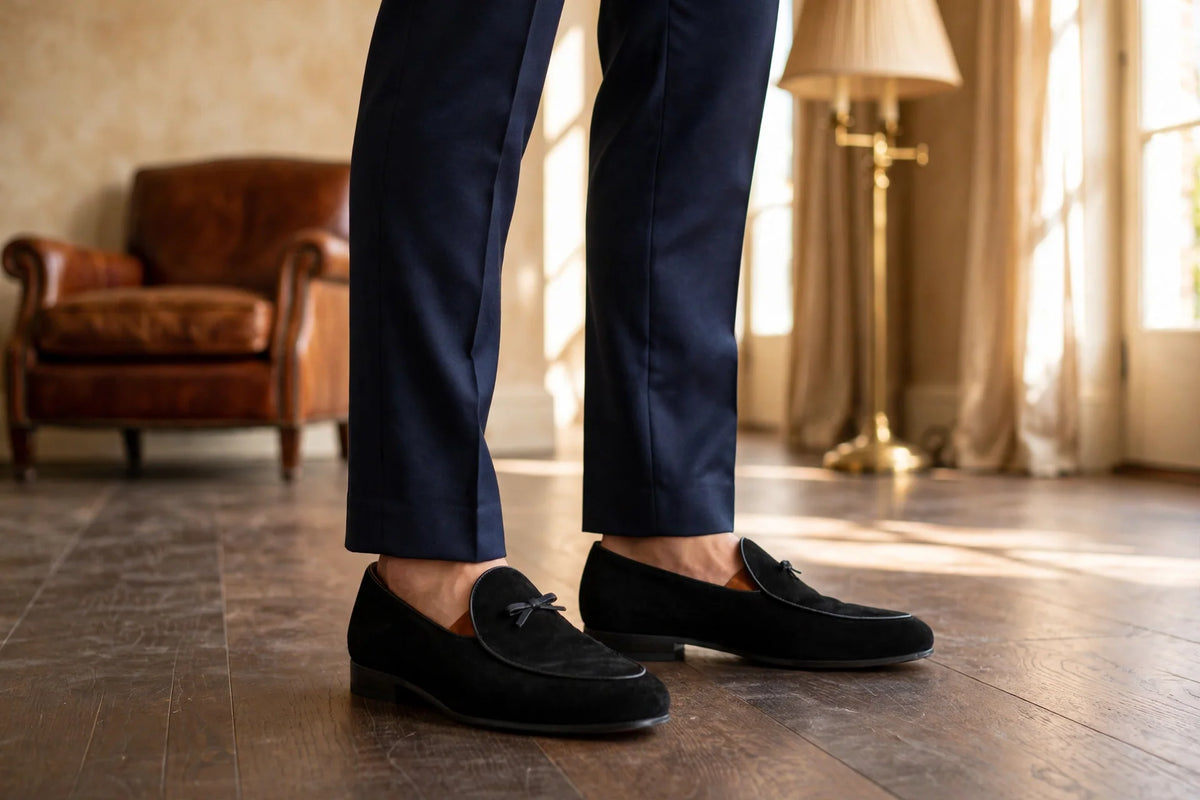
The nap of suede creates a range of tones depending on the angle of light. A black suede Belgian loafer will appear deep charcoal in direct sunlight, rich midnight blue in shade, and almost velvety black under warm artificial light. This chameleon-like quality means the shoe never reads as flat — it comes alive with the changing environment, which is part of why suede lovers keep coming back to it.

2. The Belgian Last Advantage
The Belgian last is characterized by a wide, rounded toe and a foot-hugging fit that prioritizes comfort without sacrificing elegance. When combined with suede, the result is a shoe that conforms to the foot's shape over time, the material softening and personalizing to wearer's feet. The low-cut vamp of the Belgian style also showcases the suede's texture unobstructed, unlike higher-cut shoes where quarters might shade the material.
3. Versatility in Styling
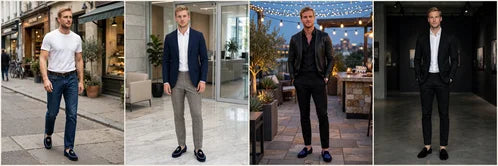
A black suede Belgian loafer is remarkably versatile. It can read as formally appropriate with a tailored suit for dark-events, or casually relaxed with cuffed denim and a crisp shirt. The key is the shoe's modesty: because it lacks the visual weight of a cap-toe or wingtip, it pairs easily with a wide range of trouser cuts and colors. A navy suit creates a tonal harmony, while grey flannels allow the shoe's black suede to provide the contrast anchor.

Care and Maintenance
Suede requires different care than smooth leather. Because the nap can be crushed or matted, suede should be brushed regularly with a soft suede brush to restore the fiber direction and remove surface dust. For water spots, a specialized suede eraser or a barely-damp cloth can spot-clean without saturating the material. Avoid wearing suede in heavy rain or slush; if the shoe does get wet, stuff it with shoe trees and allow it to air-dry naturally — never use direct heat, which can stiffen the nap and alter the color.
For the Belgian last specifically, the roomy toe box benefits from cedar shoe trees, which absorb moisture and help the shoe maintain its shape as the suede softens with wear.
Made-to-Order
All S&D Belgian loafers are made to order, meaning each pair is uniquely crafted for one customer. The process:
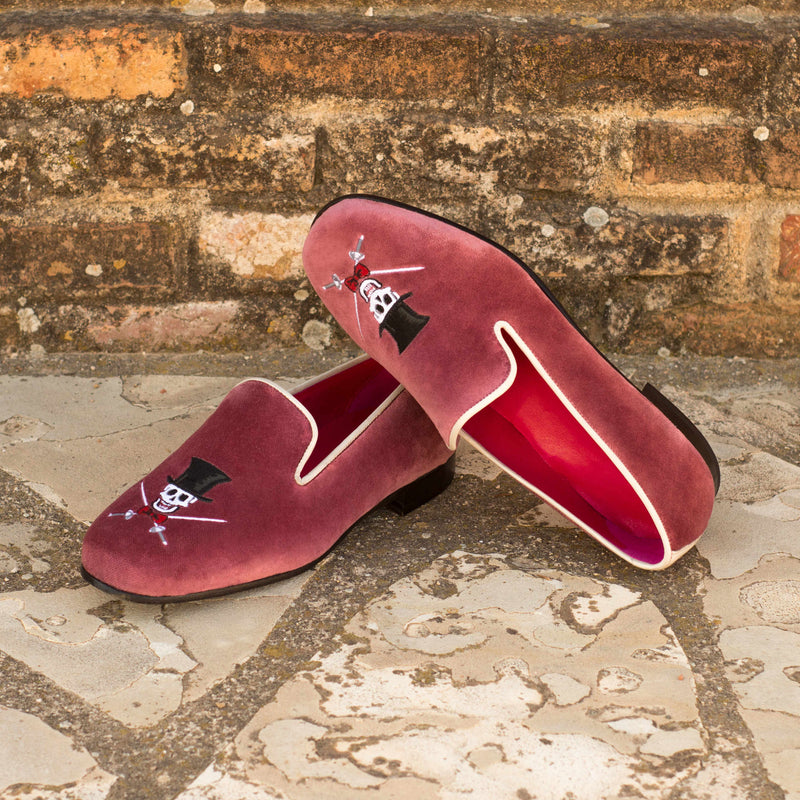
- Specify suede color, trim treatment (plain or crested), and vamp style (tassel, plain, or medallion) in the design studio.
- The spec is confirmed with you before anything is cut — no rack, no inventory, no compromise.
- Production takes 4–6 weeks from confirmation to delivery.
- One customer, one pair: the made-to-order model ensures your shoes are unlike any other.
— The Atelier